
The story of cystic fibrosis through the women and men who wrote it
A historical look at the evolution of cystic fibrosis through the researchers, clinicians, and committed individuals who have shaped its understanding and management.
Sébastien Puli, coordinator at Living with Cystic Fibrosis
2021

Today we know that cystic fibrosis appeared in the Bronze Age, due to the consumption of milk in certain populations, creating a mutation that gradually spread (see our article in Live Express 2021). Long attributed to bewitchment — as evidenced by this adage from North European folklore dating from the Middle Ages: “Woe to the child for whom a kiss on the forehead has a salty taste. He is bewitched and must die soon.” —, the first written documentation associated with a symptom of cystic fibrosis is found in a 15th century spellbookE century, the Codex Latinus Monacensis 849, in which the blessing Wieder Elbe recommends licking the nose of children suspected of bewitchment to check if they have a salty taste.
It was not until the end of these dark ages and the development of modern medicine to obtain the first scientific description of the disease in 1936, the identification of the gene responsible in 1989 and the generalization of neonatal screening allowing rapid treatment.
Numerous doctors and researchers have participated in this long journey through the ages, each contributing their own contribution. Although it is impossible to cite all of them in a single article, we invite you to discover the portraits of the women and men who have written the main pages of the history of cystic fibrosis.
Before the 20thE century — First descriptions
Pieter Pauw — First medical description — 1595
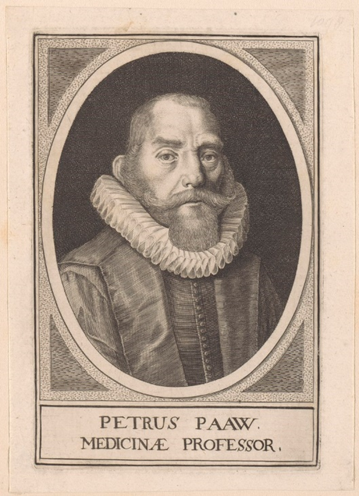
Pieter Pauw (1564-1617) was a Dutch botanist and physician who lived in the 16th centuryE century. He is considered to be the first to describe the pancreatic lesions associated with cystic fibrosis. On January 16, 1595, while teaching anatomy at the University of Leiden in the Netherlands, he performed an autopsy on an 11-year-old girl who, according to his report, was allegedly “bewitched.” He then wrote: “She had been showing strange symptoms for eight years. The child was very thin and exhausted from a prolonged fever (hectic). The pancreas was lumpy, hard, and white after opening it. The cause of death is the pancreas.” He also mentioned the presence of pericarditis, a condition known today to occur in some cases of CF. This report is therefore considered to be the first description of pancreatic lesions associated with cystic fibrosis in the history of medicine.
Juán Alonso Ruyzes de Fontecha — First trace of the disease/salt relationship written by a doctor — 1606
Juan Alonso Ruyzes de Fontecha (1560-1620) was a physician and professor of medicine at the University of Alcalá de Henares in Spain. In 1606, in his book Diez Privilegios para Mugeres Preñadas, he wrote that when scratching the foreheads of people considered to be bewitched, there was a salty taste on the fingers. Although this disease was still associated with witchcraft, it was the first trace left by a physician about the relationship between sickness and salt. This relationship will be found in numerous works later, such as that of Rochholz in 1857, before the development of the “sweat test” much later.
First half of the 20th centuryE Century — Recognition of the disease
It will be a long time before ancient medicine, often tinged with charlatanism, gradually evolves towards a more modern approach, based on observation and experimentation. Numerous discoveries will take place between the end of the XXVII.E century and the 20thE century — in particular the microscope, the understanding of major physiological functions (breathing, digestion, blood circulation, etc.) and the development of new techniques — and they will allow, in 1936, the first scientific description of cystic fibrosis and the understanding of its characteristics.
Guido Fanconi — First scientific description of the disease — 1936
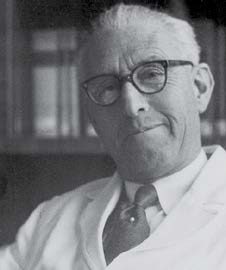
Guido Fanconi (1892-1979) was a Swiss pediatrician, graduated from the University of Zurich in 1918. In 1929 he was appointed director of the Children's Hospital, and holder of the chair of pediatrics at the same university. In 1936, he directed a thesis devoted to the study of children presumed to have celiac disease, an inflammation of the intestine in which he noted a relationship between pancreatic damage and bronchial dilation. This was the first scientific description of cystic fibrosis. However, he did not name it as a disease in its own right.
Dorothy Hansine Andersen — Distinction of pathology, inheritance, and 1Er biological test — 1938-1946
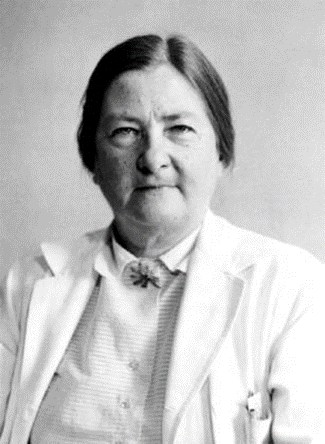
Dorothy Hansine Andersen (1901-1963) was an American pediatrician and pathologist. During her research at Babies Hospital in New York, she was able to describe the main clinical and histological characteristics of cystic fibrosis, including lung problems, digestive disorders, and anatomical lesions of the pancreas. She concluded that there was an individual pathology that she called “pancreatic cystic fibrosis”, which, however, obscured the pulmonary component. The medical community adopted this name and later shortened it to cystic fibrosis.
Then, in 1946, Dorothy H. Andersen and Richard G. Hodges, after observing that cystic fibrosis affected several members of the same family in equal proportions in boys and girls, suggested that the disease is genetic in nature with an autosomal recessive mode of inheritance. But at this time, we are still a long way from knowing the gene responsible.
In addition, she developed a first biological diagnostic test with the analysis of the content of pancreatic enzymes. However, the highly invasive nature of the procedure made this test not very applicable in children.
Sydney Farber — New term and consideration of multi-organ impairment — 1943
Sydney Farber (1903-1973) was also an American pediatrician, considered to be the father of modern chemotherapy, and practiced at Boston Children's Hospital. In 1943, he proposed the term Mucoviscidosis (cystic fibrosis), in reference to the words “mucus” and “viscous”, to highlight the multiorgan damage affecting in particular pulmonary and intestinal secretions, without being limited to. However, the English and Spanish speaking scientific communities will continue to use the term cystic fibrosis, while French and German speakers will prefer the new term.
Second half of the 20th centuryE century — Organization of research and care
In the 1950s, parents of young patients with cystic fibrosis, as well as caregivers and researchers, came together and formed an association. Their mission is to improve the quality and life expectancy of people living with the disease, the quality of care and the training of health personnel; to disseminate information; and to help develop research. These organizations will also promote dialogue between the scientific and medical community, and families.
This was followed by the creation of the first centers specialized in cystic fibrosis, including the one in Montreal in 1957, which met a need formulated for a long time by the families of patients: the adoption of a global approach to the consequences of cystic fibrosis.
Paul di Sant'Agnese — Sweat test and first organization — 1948-1955
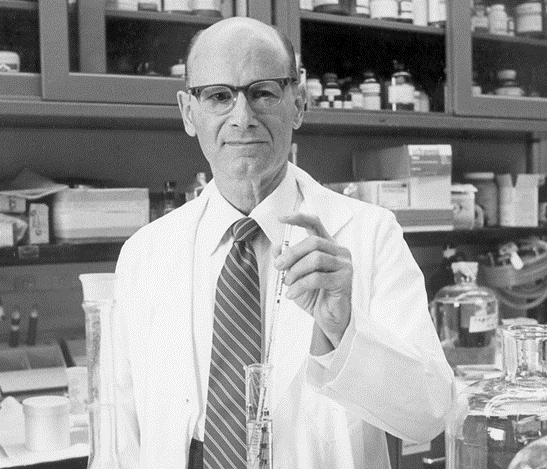
Paul di Sant'Agnese (1914-2005) was an American pediatrician and researcher. He was one of the greatest figures in the research and understanding of cystic fibrosis. It was during the 1948 heat wave in New York, when he saw many patients with cystic fibrosis in states of severe dehydration coming in for consultation, that he was able to make the diagnosis of hypotonic extracellular dehydration (too low in salt), which he explained by an excessive loss of ion. He then decided to measure the ionic composition of sweat in his patients in order to compare it with a non-fibrocystic control group. He discovered in his patients a high preponderance of C1- and Na+ ions, and therefore salt. It is thanks to this discovery that the sweat test was born! It is still in use today.
In 1955, thanks to the impetus of Sant'Agnese, the first organization in history to cause cystic fibrosis, the National Cystic Fibrosis Research Foundation, was founded. It later became the Cystic Fibrosis Foundation. Other organizations were created: the Canadian Cystic Fibrosis Foundation in 1960, the United Kingdom Cystic Fibrosis Trust in 1964 and the French Cystic Fibrosis Association in 1965.
He chaired International Cystic Fibrosis (the predecessor of CF Worldwide) when it was founded in Paris in 1965.
Ettore Rossi — International Research — 1959
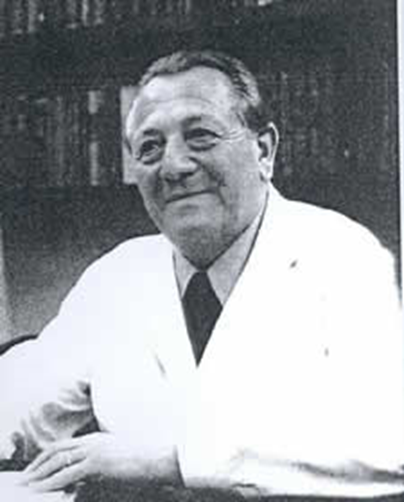
Ettore Rossi (1915-1999), a Swiss pediatrician, was the founder of the European Working Group for Cystic Fibrosis, ancestor of the current European Cystic Fibrosis Society. This learned society was born from the desire to share and develop research at the international level. It organized its first congress in Vienna (Austria) in 1960, and it has renewed every year since then, this meeting which attracts numerous specialists. The North American Cystic Fibrosis Conference will then follow, a conference that has become an unmissable conference today.
Harry Shwachman — Definition of the three pillars of modern disease management — 1955
Harry Shwachman (1910-1986), pediatrician and nutritionist at Children's Hospital in Boston, defined in 1955 the three pillars of disease management:
- Early diagnosis
- Early and active treatment of lung infection
- Monitoring and maintaining nutritional status
Although difficult to implement at the time for technical reasons and due to a lack of knowledge about adequate diets, his vision later served as an example in the management of the disease.
Douglas Crozier — New nutritional approach — 1974
Driven by specialized centers, the medical community changed its approach in the early 1970s, preferring to wait longer for the onset of symptoms to begin treatment. In 1974, Douglas Crozier, a pediatrician at the Cystic Fibrosis Clinic at the Hospital for Sick Children in Toronto, published the article Cystic Fibrosis — A Not So Fatal Disease [Free translation: Cystic fibrosis — a not so fatal disease], in which he recalls the foundations already presented by Harry Shwachman and the importance of a multi-organic and multidisciplinary approach. He denounced the traditionally recommended low-fat diet by preferring a normal and more appetizing diet, of course, but accompanied by the intake of pancreatic enzymes in capsules. The longer life expectancy of patients in Toronto proved him right, and the link between nutritional status and lung function will then become more and more obvious. Since the arrival of a new enzyme preparation in 1977, the nutritional status of people living with cystic fibrosis has improved a lot.
Discoveries
Michael Knowles and Paul Quinton — Discovery of the primary defect in cystic fibrosis — 1981-1983
In 1981, Michael Knowles, a researcher at the University of North Carolina, discovered a bioelectrical anomaly in the respiratory epithelium of people with cystic fibrosis. This anomaly was also observed in affected newborns, which confirmed that it was a primary defect in the disease, and not a side effect. It was then that in 1983, Paul Quinton, a researcher and living with cystic fibrosis himself, succeeded in explaining that this anomaly was linked to an alteration of ion transport, and confirmed that it was the primary defect of the disease.
Francis Collins, Lap-Chee Tsui, and John Riordan — Gene identification — 1987
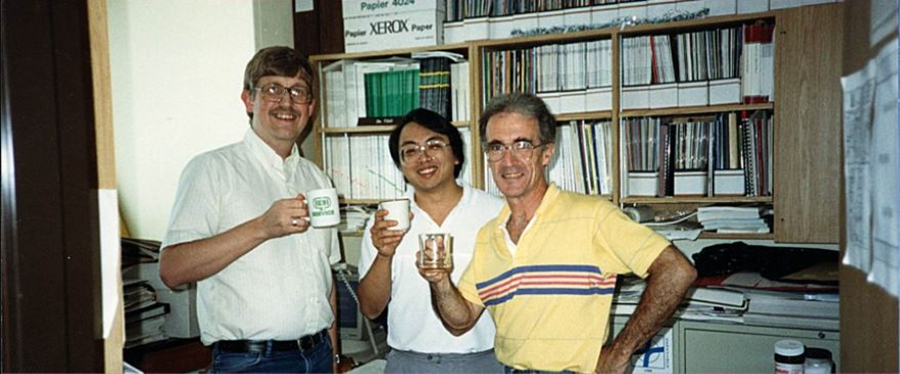
Although the structure of DNA was discovered in 1953, it took more than 30 years for the gene responsible for cystic fibrosis to be identified. In 1985, Lap-Chee Tsui, a geneticist and scientific researcher, discovered the chromosome carrying this gene. Research continued with the collaboration of three teams led by Lap-Chee Tsui and John Riordan in Canada, and Francis Collins in the United States. In 1989, these three researchers published the results of their work: the identification of the Cystic fibrosis transmembrane conductance regulator (CFTR) gene, the description of the gene structure, the nature of the corresponding protein and the characterization of the mutation responsible for cystic fibrosis. The gene was named and located in bronchial cells, pancreas, liver, and sweat glands. Today, nearly 2,000 CFTR gene mutations are known. However, 70% of patients are affected by the F508del mutation while 30% of patients are carriers of one or more of the 2,000 other mutations. Mutations are categorized into six classes according to their functioning, which will make it possible to implement different therapeutic approaches.
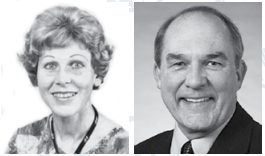
Jeanette Crossley and Philip Pharrell — Neonatal screening — 1979-1998
Since the 1970s, various approaches have been tried to detect cystic fibrosis, but none of them were unanimously accepted due to their complexity or lack of reliability.
In 1979, the work of Jeanette Crossley from New Zealand opened up a new avenue: the detection of a high level of immunoreactive trypsin (IRT) in the blood of newborns suffering from cystic fibrosis. Several experiments were then set up in New Zealand, Australia, France, France, France, United Kingdom, Italy and the American states of Colorado and Wisconsin. Although the results were convincing, it appeared that the results of many screenings were “false positives.” To overcome this problem, a so-called “two-step” strategy was put in place, which consisted in carrying out a second IRT test a few weeks after birth. The discovery of the CFTR gene in 1985 will improve the results of neonatal screening.
However, beginning in the 90s, when the requirement of “Evidence-Based Medicine” became necessary, part of the medical profession still expressed skepticism about the benefit of early detection. Numerous studies have been published showing the advantage of early management, in terms of nutrition and respiratory functions.
In September 1998, at the 3rd international congress in Caen on neonatal screening, results on IRT+DNA screening were presented, demonstrating the benefits of early care. During a speech, American doctor Philip Farrell uttered a sentence that will reverse the role between proponents and opponents of neonatal screening: “The burden of proof is now on those who are against neonatal screening for cystic fibrosis.” [Free translation: The burden of proof now falls on those who are against neonatal screening for cystic fibrosis.] This statement, together with the scientific results obtained, opened the way for the generalization of neonatal screening.
As we have seen, the long and complex history of cystic fibrosis was written by many women and men. This article only presents a small part of it, because many other people who participated in this journey could have been there, for example, the Danish Niels Hoiby and his work on pseudomonas in 1976. Today, advances in knowledge and understanding of the disease have allowed the development of therapies that have improved the life expectancy and quality of life of people living with cystic fibrosis. But there is a long way to go, and history is still being written today.
Sources:
Georges Travert. 2019. Cystic fibrosis, the story of a medical and human adventure. Paris: L'Harmattan edition
REvista Clínica Española Volume 214, Issue 6, August—September 2014, Pages 309-310 J. de Gracia* and A. Álvarez Fernández Unidad de Fibrosis Quística, Servicio de Neumología, Servicio de Neumología, Hospital Vall d'Hebron, Hospital Vall d'Hebron, Hospital Vall d'Hebron, Hospital Vall d'Hebron, 2014, Pages 309-310 J. de Gracia* y A. Álvarez Fernández Unidad de Fibrosis Quística, Servicio de Neumología, Department of Neumology, Hospital Vall d'Hebron, Hospital Vall d'Hebron, Hospital Vall d'Hebron, Hospital Vall d'Hebron, Hospital Vall d'Hebron, University of Barcelona,
Pérez J, Pérez E. Historical antecedentes de la fibrosis quística. By: Dapena FJ, ed. Quistical fibrosis: integral attention, clinical management and daily life. Granada: Alhulia; 1998
Image sources:
Wikipedia, cysticfibrosis.online, timetoast.com and BMJ journals