CFTR modulators and mental health
This article takes stock of the possible links between CFTR modulators, in particular Trikafta, and mental health, by exploring indirect psychological effects, possible biological mechanisms, drug interactions, and the importance of individualized follow-up.

By Dr. Anna Georgiopoulos
Cystic Fibrosis Psychiatrist Boston, United States
IMPACT OF CFTR MODULATORS ON QUALITY OF LIFE AND MENTAL HEALTH
Modulators of the regulator of transmembrane permeability in cystic fibrosis, named CFTR for Cystic Fibrosis Transmembrane Conductance Regulator, in particular Trikafta triple therapyMD (elexacaftor/tezacaftor/ivacaftor), have transformed the lives of many people living with CF. Indeed, taking these modulators improved their physical symptoms and their quality of life (Regard, Martin, Burnet, Da Silva, Burgel, 2022). For others who are not eligible for treatment because of their CFTR variants or who do not have access to it (Guo, Garratt, Hill, 2022), the announcement of the approval of TrikaftaMD was able to arouse contradictory emotions, including disappointment, frustration, and concern about the future (Keyte, Kauser, Mantzios, Egan, 2022). And some who are eligible for treatment have side effects that make TrikaftaMD dangerous to use or difficult to tolerate and as a result, they may also experience distress.
Questions concerning the impact on mental health of taking CFTR modulators have therefore emerged. Data on this topic are limited to describing the experiences of individuals or small groups of people with CF who have started taking a modulator. These reports describe improved mood or worsening anxiety, increased or decreased energy levels, changes in thinking, memory, or concentration (“brain fog”), and sleep disorders (Bathgate, Hjelm, Hjelm, Filigno, Filigno, Smith, Georgiopoulos, 2022).
HOW COULD MENTAL DISORDER SYMPTOMS BE LINKED TO MODULATORS?
Larger studies will be needed to more clearly demonstrate and understand the relationships between CFTR modulators and mental health. However, there are several ways to think about the possibility and how CFTR modulators could be linked to mental disorder symptoms (Talwalkar, Koff, Lee, Britto, Mulenos, Mulenos, Georgiopoulos, 2017).
Hypothesis 1: The modulator is not related to changes in mental health.
The first possibility is that a person's mental disorder symptoms are not caused by a CFTR modulator. Compared to the general population, people with CF have a higher risk of mental health problems, such as depression, anxiety, attention problems, and sleep disorders (Bathgate, Hjelm, Filigno, Filigno, Filigno, Smith, Smith, Georgiopoulos, 2022). These difficulties can be caused or compounded by many factors, including the stress of living with CF, pain, inflammation, or periods of poor nutrition or lack of oxygen. The announcement of the approval of TrikaftaMD also coincided with the COVID-19 pandemic, which could make it difficult to distinguish what triggers mental health changes during this time. The pandemic has created uncertainty, fears, and losses affecting the emotional well-being of many people, and has also had profound effects on CF and mental health care delivery (Smith, Georgiopoulos, Mueller, Abbott, Abbott, Lomas, Aliaj, Quittner, 2021). Mental health symptoms are common and often improve or worsen over time or in response to starting or stopping mental health treatment. For these reasons, you might expect some people to notice changes in their mental health around the time they started taking Trikafta.MD, for the sole reason of coincidence.
Hypothesis 2: Psychological impact at the beginning of taking a modulator
Even when changes are welcome and positive, they can be stressful and can lead to anxiety, sadness, or feelings of distraction and concern. This may be true for people with CF who are starting modulator therapy. Improving health status can lead to a reassessment of the past and the future, concerns that the benefits of modulators will not last, and a reflection on how identity and life could change if health conditions were more stable. Some may feel overwhelming pressure to do “more” at work, school, or home, or worry about losing social supports they've been relying on or benefits such as disability benefits. Self-image may change; for example, people who gain weight (even if it is a normal weight) after starting to take TrikaftaMD may have body image issues. Despite being recognized for the health benefits of modulators, those treated may also experience survivor guilt over people with CF who were not fortunate enough to benefit from treatment.
Hypothesis 3: Direct effects of modulators on the brain
CFTR is found not only in the lungs, but also in other parts of the body, including nerve cells inside and outside the brain. Although the role of CFTR in the brain is uncertain, changing its quantity due to cystic fibrosis and/or taking a modulator could alter brain function. CFTR modulators could also affect how nerve cells communicate with each other. For example, ivacaftor, an ingredient in all CFTR modulators currently available, has been shown to connect to neurotransmitter receptors and transporters such as serotonin, norepinephrine, and dopamine (Schneider, McQuade, Carbone, Carbone, Carbone, Reyes-Ortega, Reyes-Ortega, Reyes-Ortega, Wilson, Button, Saito, Poole, Hoyer, Li, Velkov, 2018). Many medications used to treat depression, anxiety, and attention-deficit/hyperactivity disorder (ADHD) also have effects on these neurotransmitters. It is therefore plausible that CFTR modulators may have a direct impact on mental disorder symptoms.
Hypothesis 4: Drug interactions between modulators and psychiatric medications
Drug interactions can change the effectiveness of modulators or psychiatric medications, or increase the risk of side effects (Bathgate, Hjelm, Filigno, Smith, Smith, Georgiopoulos, 2022). For example, the lumacaftor, found in OrkambiMD, is known to decrease the levels of the antidepressants citalopram, escitalopram, and sertraline. When a person with CF takes one of these antidepressants and starts taking OrkambiMD, she may notice a worsening of symptoms of depression or anxiety and may have to increase the dose of the antidepressant. In addition, carbamazepine (anticonvulsant and mood stabilizer) and St. John's Wort (an over-the-counter supplement sometimes used to treat depression) may reduce Trikafta levelsMD and make it less effective. Drugs are assimilated by the body using various routes. Thus, when side effects occur after the introduction of a new drug, the potential role of drug interactions should be considered.
TALK TO YOUR HEALTH CARE PROVIDERS ABOUT MENTAL HEALTH
If you are taking a CFTR modulator and are concerned about your mental health, ask for an evaluation by a mental health professional who can work with your CF care team. In many CF centers, a social worker or mental health coordinator can help you start this process. Some CF centers work closely with psychologists or psychiatrists who specialize in treating people with both physical and mental health conditions.
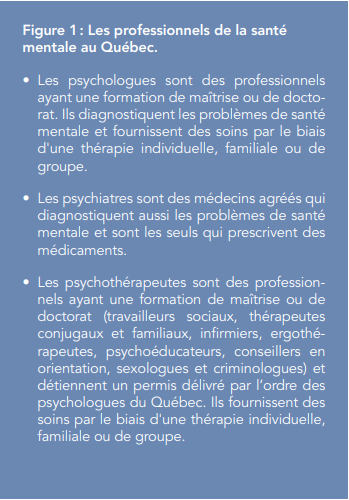
Who are the mental health service providers? What services do they provide?
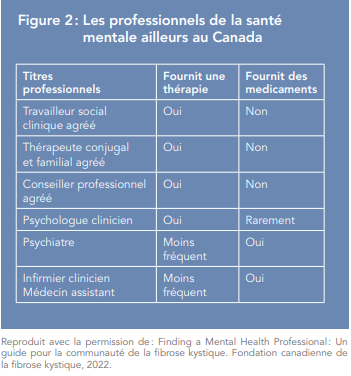
It's important to talk openly about what you've been through. Tell your treatment team when your symptoms started, how frequent and severe they are, how they affect your daily life, and what you think may have caused them. When do your symptoms of a mental disorder appear compared to taking TrikaftaMD or other life stressors? Have there been any recent changes in your other cystic fibrosis medications, psychiatric medications, or any other over-the-counter or non-prescribed substances that you use? Your team will also want to know what you've tried so far to address these issues and whether the symptoms are improving, getting worse, or staying the same. If you are worried that your symptoms are related to taking TrikaftaMD, explain what led you to make this connection. Have you had physical side effects, such as liver problems?
Your healthcare providers will ask if you have had mental health symptoms or mental health treatment in the past, and if so, what has helped you. Ask yourself if the symptoms you are experiencing right now are similar or different from those you may have had before. If members of your family have suffered from mental disorders, it can also provide useful clues in making a diagnosis and prescribing the most effective treatment.
Making a decision on next steps
A variety of therapeutic approaches are available to treat mental disorders that develop or worsen while a person is taking a CFTR modulator. If symptoms are mild or improve over time, intervention may not be necessary. Support from friends, family, or health professionals can help adapt to living with CF in the age of CFTR modulators. It may also be helpful to look for resources with information on CF and mental health, such as the CF Foundation website (https://www.cff.org/managing-cf/mental-health) or Facing CF (Sher, Georgiopoulos, Stern, 2020). Behavioral strategies and psychotherapy have a strong evidence base that they are effective in managing depression, anxiety, insomnia, and other mental health conditions. Likewise, whether or not the symptoms are related to taking a CFTR modulator, it is possible to start taking psychiatric medications or to adjust them to target annoying symptoms.
In some cases, stopping the CFTR modulator or changing the dose may be attempted to help assess whether mental disorder symptoms are related to the modulator and whether the chosen strategy will alleviate them. However, stopping the modulator may cause its beneficial effects on physical health to be lost; and there is limited data available to guide the safe and effective use of a dose below the recommended dosage (Spoletini, Gillgrass, Pollard, Pollard, Shaw, Williams', Williams', Etherington, Clifton, Peckham, 2022). These two strategies should therefore be approached with caution.
If you are experiencing negative mental health side effects and are considering changing your Trikafta doseMD or to stop it, it is important to talk to your CF care team first. Talk to your team members about the risks and benefits of changing medications and the symptoms of mental health problems, which may also depend on your personal circumstances.
- How risky would it be to try to stop TrikaftaMD ? Consider any improvements in your health or quality of life since you started taking the medication. The consequences of a short trial without a modulator could be very different depending on how advanced CF is before the start of taking Trikafta.MD (person with normal lung function and rare pulmonary exacerbations versus person with frequent hospitalizations and waiting for a lung transplant).
- How severe are the symptoms of a mental disorder and what discomfort do they cause? For example, an occasional problem with concentration may be a minor nuisance, but if attention problems are persistent and severe, they may cause difficulties in succeeding in school or maintaining employment.
- What is the risk of mental disorder symptoms staying the same or getting worse? Are there safety concerns? Whatever the cause, some symptoms, such as feelings of being suicidal, agitated, or out of touch with reality, require immediate attention.
- What are the alternatives to stopping the TrikaftaMD ? Are there coping techniques that you could use to manage your mental disorder symptoms, or other psychological or medication treatment strategies that would be a good idea to try?
Because preferences and tolerance for different types of risks can vary from person to person, two people in similar circumstances may make different choices. It is important to discuss your goals and values with your healthcare team when making decisions about next steps.
Follow the changes
Whatever intervention you decide to try — or even if you decide it's best not to change anything about your CF or mental health treatment plan right now — talk to your healthcare team about how together you will monitor your physical and emotional health. Make a list of the changes that would be most important to look for as early signs of a deterioration in your health (such as an increase in cough or fatigue) or an improvement (such as better sleep or a decrease in anxiety). It can be easy to forget details, so if you can, keep a daily journal to keep track of how the situation evolves over time. Include the physical and emotional symptoms that concern you the most, such as depression, irritability, anxiety, sleep, or pain. Also, note any medication changes and significant life events or stressful situations that could affect your condition, such as a new relationship, financial problems, or final exams. It may be a good idea to meet with your treatment team more often than usual to take stock.
LEARN MORE ABOUT CFTR MODULATORS AND MENTAL HEALTH
Health care providers and people with CF are still learning the effects of CFTR modulators together. Research is ongoing and new studies are being designed to help the CF community better understand the complex effects of modulators, both positive and negative. Partnering with your treatment team is critical in helping you optimize your physical and mental health.
REFERENCES
Bathgate CJ, Hjelm M, Filigno SS, Filigno SS, Smith BA, Georgiopoulos AM. Management of mental health in cystic fibrosis. Clin Chest Med 2022, in press.
Sher Y, Georgiopoulos AM, Stern TA (eds.) Facing Cystic Fibrosis: A Guide for Patients and Their Families. Boston: Massachusetts General Hospital Psychiatry Academy, 2020.
Guo J, Garratt A, Hill A. Hill A. Worldwide rates of diagnosis and effective treatment for cystic fibrosis. J Cyst Fibros. 2022 May; 21 (3) :456-462. Epub 2022 Feb 4.
Keyte R, Kauser S, Mantzios M, Egan H. The psychological implications and health risks of cystic fibrosis pre- and post-CFTR modulator therapy. Chronic Illn. 2022 May 3:17423953221099042. Epub ahead of print.
Regard L, Martin C, Burnet E, Burnet E, Da Silva J, Burgel PR. CFTR Modulators in People with Cystic Fibrosis: Real-World Evidence in France. Cells. 2022 May 28; 11 (11) :1769.
Schneider EK, McQuade RM, Carbone VC, Reyes-Ortega F, Reyes-Ortega F, Wilson JW, F, Button B, Saito A, Poole DP, Hoyer D, Li J, Velkov T. The potentially beneficial central nervous system activity profile of ivacaftor and its metabolites. ERJ Open Res. 2018 Mar 13; 4 (1) :00127-2017. Erratum in: ERJ Open Res. 2018 Dec 21; 4 (4).
Smith BA, Georgiopoulos AM, Mueller A, Mueller A, Abbott J, Abbott J, Lomas P, Aliaj E, Quittner AL. Impact of COVID-19 on mental health: Effects on screening, care delivery, and people with cystic fibrosis. J Cyst Fibros. 2021 Dec; 20 Suppl 3:31-38.
Spoletini G, Gillgrass L, Pollard K, Pollard K, K, K,, Shaw, N, Shaw, N, Shaw N, Williams E, Etherington C, C, Clifton, J, J, C, Clifton, J, and Peckham Dose adjustments of Elexacaftor/Tezacaftor/Ivacaftor in response to mental health side effects in adults with cystic fibrosis. J Cyst Fibros. 2022 May 15:S1569-1993 (22) 00111-4. Epub ahead of print.
Talwalkar JS, Koff JL, Lee HB, Lee HB, Britto CJ, Mulenos AM, Georgiopoulos AM. Cystic fibrosis transmembrane regulator modulators: Implications for the management of depression and anxiety in cystic fibrosis. Psychosomatics 2017 Jul—Aug; 58 (4) :343-354. Epub 2017 Apr 5.