Salty tips: stay hydrated when living with cystic fibrosis
A practical guide to understand why and how to increase salt and fluid intake when living with cystic fibrosis, especially during periods of physical activity and heat.
After the winter we had, I imagine that you are teeming with happiness at the idea of taking out your bike, your sneakers, the dog leash, the stroller, the skateboard, the skateboard, the canoe, the kayak!
But something essential is missing from this list...
Something you should never forget: a bottle of water (or other liquid) and bags of salt (sodium chloride).
What is salt for?
A good proportion of sodium, chlorine and water in the body is essential for its proper functioning. Salt helps maintain the proper distribution of fluids in our body. A lack of salt can lead to discomfort such as muscle cramps, headaches, decreased appetite, vomiting, abdominal pain, weakness, nausea. In extreme cases, a lack of salt and dehydration can cause death.
Why more salt for people living with cystic fibrosis?
Elementary, my dear Watson! Cystic fibrosis is caused by a defect in the chlorine channel so that when you are hot and sweaty, you lose, in addition to water in the sweat, a much larger amount of salt than a person who is not cystic fibrosis (76 mEq of sodium/L of sweat in cystic fibrosis versus 43 mEq/L in non-fibro-cystic patients)1; the mucus you produce is therefore thicker, which causes the lungs, pancreas, and liver to malfunction.
You must therefore replace this lost salt and hydrate yourself well.
Why don't you often feel thirsty?
As through sweat you lose water but also a lot of salt, the message of thirst does not come true! This is called voluntary dehydration. Thirst is usually felt when the body detects higher levels of sodium in the blood. You may not be thirsty enough to stay hydrated (minimum of 2 liters of liquid per day).
Salt intake to be increased in sports drinks
As it was mentioned above that someone with cystic fibrosis's sweat contains nearly twice as much sodium as someone else's, people often choose sports drinks thinking they contain enough salt. Well, not really! Sports drinks contain less sodium than milk! To adjust the sodium level in these drinks, it is therefore recommended to add 1/8 tsp per 350 ml of sports drink and per 250 ml of water or 1/2 tsp of salt per liter of water.
Adding enough salt will promote thirst and hydration. For physical activity that will last longer than 30 minutes, in hot weather, it is recommended to drink 1 to 2 hours and 15 minutes before physical activity, during and after physical activity. The weight after intense physical activity should be the same as at the beginning.
No more salt all the time!
When the activity is over and on days without physical activity, your body will need less salt, but you will still need to continue to eat salty foods. Since there is no exact amount of salt recommended for adults with cystic fibrosis, all they need to do is salt more than the average adult, which is around 2,300 mg of sodium per day, and drink at least 2 liters of liquid per day, and more in hot weather.
To give you a comparison scale, when we recommend that the general public reduce their salt intake, we recommend about 1,500 g of sodium per day, Which is really not enough for people with cystic fibrosis.
What can you do to increase your sodium intake?
I've found that many of my patients don't like the taste of salt... or live with other family members who have to limit their salt intake.
In this case, try to find a salty food that you can add to your less salty meals, such as olives (3 olives provide 260 mg* of sodium), dill pickles (830 mg each), cheese* (500 mg of sodium for 30 g of feta, 125 ml of cottage cheese, 30 ml of Cheez Whiz), 30 ml of Cheez Whiz.MC), bacon* (725 mg for 2 slices). In addition, the dehydrated soup base, BovrilMC and soy sauce (1040 mg per 15 ml or 1 tablespoon) can be used to season rice, sauces, soups. Soups and canned foods are generally a real salt mine.
The savory choices at the restaurant are multiple: Mexican, Asian, ready-to-eat, everything is archisal! You'll easily ingest 1,000 mg of sodium per meal at a restaurant.
Office breaks can be savory breaks like with a Cup-a-SoupMC (960 mg of sodium per 250 ml) accompanied by wheat crackers (173 mg per 16 g). To add fiber to your snack, choose salted nuts or peanuts (350 mg for 55 g), for example. Serve raw vegetables with a dip (410 mg for 60 ml of onion dip). Choose salted cold meats for sandwiches or salads (995 mg for 75 g of roasted ham*), canned tuna or salmon (350 mg for 75 g of fish), canned sardines (535 mg for 1 can of fish in oil), canned sardines (535 mg for 1 can of fish in oil).
Bring a mini salt shaker in your lunch bag, or always leave one on the table. Garlic, celery, or onion salt can add flavor to some foods and drinks (530 mg for 1 margarita, sometimes!). For fine tooths, there is an interesting variety of salts on the market such as fleur de sel, smoked salt, pink Himalayan salt... why not! Using a salt mill will make it possible to obtain larger crystals and therefore consume more salt. It's delicious in salads and gives an interesting crunch at the same time!
Before cooking steak or other meat on the barbecue, rub the piece of meat with coarse salt: this brings out the taste of the meat! Montreal spices from Schwartz charcuterie for steak or chicken are now available in grocery stores; they contain coarse salt and are very high in sodium.
To check the amount of sodium, read product labels or consult the Health Canada publication called Nutritive value of some common foods At http://www.hc-sc.gc.ca/fn-an/alt_formats/pdf/nutrition/fiche-nutri-data/nvscf-vnqau-fra.pdf.
For personalized advice, consult the dietitian-nutritionist on your CF team.
So, salt and get jealous!
Have a nice summer!
Marjolaine Mailhot, Dt.P., M.Sc., nutritionist-dietitian
Élise Jalbert, nutrition intern at the Cystic Fibrosis Clinic at the Hôtel-Dieu du CHUM
Nutrition
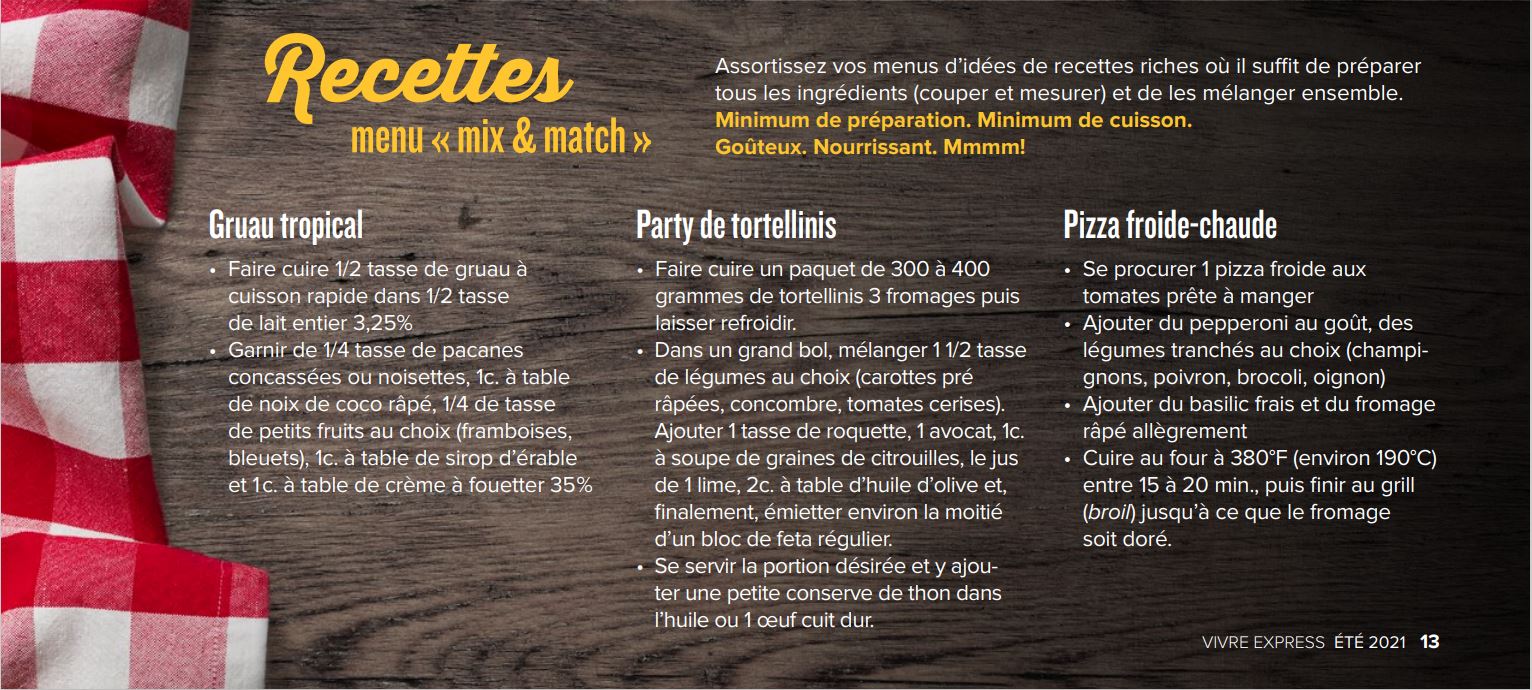
Nutrition and cystic fibrosis: recipes
Cystic fibrosis nutrition must be personalized to compensate for increased energy expenditure and possible malabsorption, by focusing on a richer, more flexible and pleasant diet, supported if necessary by enzymes and nutritional support.