Testimonial: Adopting in Quebec? Finally an option that meets my criteria!
A clear overview of the various options considered for starting a family after unsuccessful fertility procedures, including international adoption and adoption in Quebec.
As I said before, I was full of prejudices about adoption in Quebec. In my head, the DPJ took children away from parents only in extreme situations, automatically making children put up for adoption “fucked”. I had in mind that these children were all from mothers who were addicted to cocaine or alcohol. Or fathers who beat and raped children. In addition, I believed that we would never become the legal parents of the child under our protection, I believed that the parents could come back after 5 years to take away from me this child to whom I would have attached myself.
To adopt via the Department of Youth Protection (DPJ), you must start by going to an information session. In my region, it is only offered twice a year. Luckily, the next one will take place on 15 April. Chéri and I signed up.
In the meantime I am looking for a few stories about this. I came across that of François Massicote who adopted 2 children in this way. Around me, I hear great stories of people who have received babies through mixed banking.
If you want to register in regular banking (that is to say adopt a child for whom the parents gave up their rights at birth) it is a very long time, around 8 years, depending on the Quebec region (this is similar to the deadlines in China). But mixed banking is a good compromise between adoption and foster care. In fact, what is explained to us at the information session is that children who are referred to this process are unlikely to return with their biological parents, because the biological parents are assessed as being unable to take care of themselves (75% of children will be adopted, 25% will return to their biological family). So we become a foster family for this child as soon as he is removed from his family. Children who have barely been released from the hospital at birth are thus placed in foster families in order to be adopted. The biological family has between 12 and 24 months to get back on track to obtain custody of their child; after this period, the foster couple can file an adoption application. Following a favorable judgment by the Court, the biological parents will no longer have any rights over this child.
How do you qualify to be a foster family? The DPJ has a process in a few steps. We must be evaluated by the DPJ staff; our housing must meet certain criteria, a medical form is necessary (which allows parents certain health situations). Once we are accredited, a child can be paired with us within one day to 1 year on average (for my region).
In addition, we have the choice of the type of child we want to welcome, and to accept conditions or refuse them. For example, what type of parents does the child come from (ethnicity for example) or the parents' background (intellectual disability, alcoholism, etc.) We also have the choice of accepting (or refusing) a child with physical or psychological difficulties (autism, sexually abused, physical disability, etc.) In addition, we have the choice of the gender of the child and the age the child is at the time of the match. In addition, the box would you accept twins makes me dream, at the information session we are told that they have placed several twin couples in the last year!
Chéri and I left this information session confident, believing strongly in our chances of qualifying as a foster family, and in believing that our dream could come true in a reasonable amount of time.
What a comforting feeling to know that you still have options and that you can still dream of this much desired family!
But the steps to qualify will still be long, we must start by finishing our renovations, and go through the various evaluations.
Interviews and testimonies
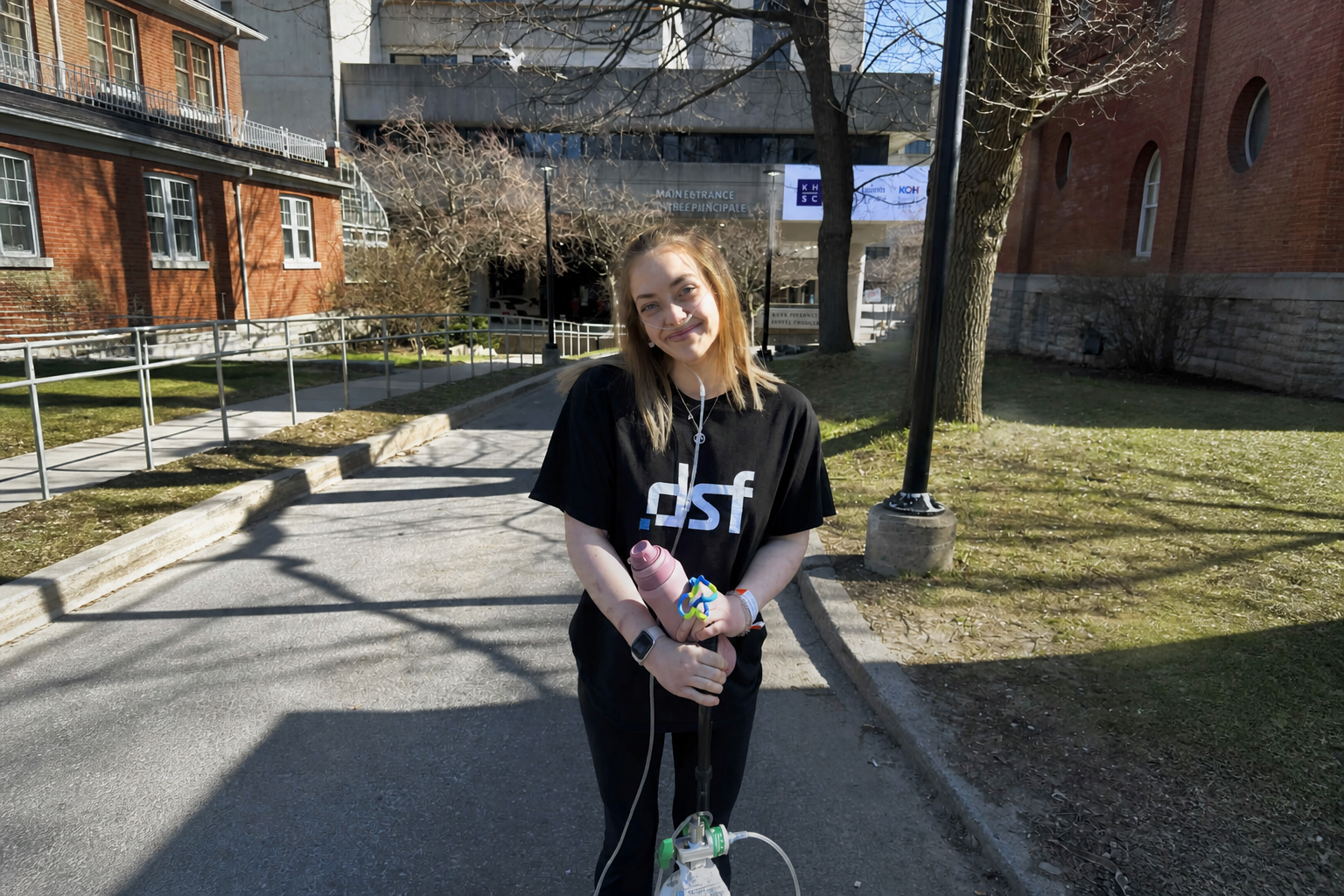
Les saines habitudes de vie avec la fibrose kystique: trouver un équilibre réaliste au quotidien
À 25 ans, Lex partage comment elle apprend à écouter son corps, à gérer son énergie et à trouver son propre équilibre avec la fibrose kystique, sans laisser la maladie définir qui elle est.
.jpg)
Aimer la vie et apprendre à la donner
Atteinte de fibrose kystique, Audrey refuse de se laisser définir par la maladie. Entre le deuil de son père, son combat pour la santé et son nouveau rôle de maman, découvrez le portrait d’une femme qui transforme chaque tempête en arc-en-ciel.