Testimonial: The post-transplant reality... Alias the dark side of living after the transplant
A lucid testimony on the psychological, financial and social challenges experienced after a lung transplant.
No, the REAL reality of a transplant recipient is not the one with rainbows, a beautiful sun and an incredible future that we all think about.
In January 2015, I received new lungs. It is a gift that I value more than anything and I am happy to be alive, to be able to do activities that I never thought I could do before and to fully enjoy this life for the first time.
But my reality, like that of most transplant recipients (especially young people), is sadder than one might think. Behind the curtains, the situation is difficult. Even if health is finally here, it is still a difficult task to get back on your feet.
I am talking about money, debt, expensive medications, and the psychological problems that follow.
I am talking about someone who, like me, had cystic fibrosis prior to their transplant and spent much of their time in hospitals, in bed, or simply at home undergoing treatment. Before the transplant, the disease and its treatment took up a significant portion of our day and our energy. If we target the age of 20 to 30 years old for successful transplants, it is because this time and energy that a normal person of our age spends studying, working, saving, gaining relevant experience and growing in the labor market is essential for new transplant recipients. But for us, this means a constant inability to work the 40 hours/weeks necessary to survive, having to let go of jobs, courses or college/university terms because we have to stay in the hospital. Sometimes the schedule is too intense for what our body allows us to do. These situations lead us to never be seen as someone worthy of promotion within a company — given our unpredictable health conditions.
And with all that, debts are piling up and piling up again. Your credit score is getting worse and worse because at some point, the only solution you can find is debt. After months, and even years for many, of getting into debt and jumping from job to job, from course to course, of not accumulating any concrete experience for references, the transplant arrives. Life is finally coming. Yay! Well no, just no.
Six more months without working — AT LEAST — after the transplant. Six months without income, six months where you have to manage to find money here and there, six months where you still have to relive the shame of asking your parents to support you financially when you are supposed to be one, - excuse my English, 27-year-old “grownass man”. And it's deteriorating your relationship.
And the debts, the debts, they continue. They are even getting worse! Many will declare personal bankruptcy after a transplant. That is the reality for many.
Psychological problems also happen and more often. Anti-rejection medication often causes several new psychological symptoms or accentuates those already present. And the ongoing stress of your financial situation is bringing out all your demons. In my case, it's compulsive buying, and that only makes the situation worse x1000. I know others for whom it has been drugs, alcohol or others...
You find yourself happy to be alive, but the reality is right in your face.
It is not for nothing that research has shown that the suicide rate among transplant recipients is 15.7 people per 100,000 per year... compared to 9.0 people per 100,000 per year for the general population, this is extremely significant.
Finding yourself at the age of 27 with the experience of an 18-year-old kid on your resume is demotivating to an unimaginable extent. Finding yourself at 27 with $12,000 in debt, not to mention the student debt that comes with it if you want to be able to continue your studies, it's your pride that falls apart. The future you've always wanted after the transplant is slowly disappearing into the distance.
Especially since, after going through all these trials in your life, the last business you want to do is kill yourself working in a fast food restaurant for minimum wage. You are finally free from your hospital prison, you certainly don't want to go lock yourself up in another prison in the form of a kitchen or cubicle. So you're cheating. You're lying on your resume. You're asking family and friends to pretend to be your references for fictional jobs you've already had. You're amplifying the time you kept your jobs and the tasks you had to do. You are trying to recreate the person you would be today if you were not born with the disease on paper. But deep down, it's humbling. It's self-humiliation.
You want to be professional, you are ready to work, but, because the disease has constantly put obstacles in your way, you have to start again at the start of the track while everyone around you reaches the finish line.
So you're making a mask for yourself. You don't talk about it. You keep that to yourself because the world around you is happy for you and you don't want to break that. You want to keep the image of the guy who knew how to conquer death and for whom everything is going like clockwork from now on.
But on the inside, you're stressing. You're crying. You are anxious. You are depressed. Sometimes you even wonder if it was really worth having your transplant, if it's to live this way.
That's the dark side of living after a transplant.
Let's talk about it!
By Alex Danis
Montreal
Editor's note: The publication of this distressed text seemed relevant and necessary to us given the research that has been done on the symptoms of stress and depression in people with CF. Do not hesitate to contact the specialists at your CF clinic if you experience these symptoms. You can also send us your comments about this text to this address: info@vivreaveclafk.com
I would also like to personally thank the author of this moving text and to reiterate my full support for him and that of Living with cystic fibrosis as well as to all those who are suffering at the moment. May our support and that of those around them suffice for the immense task of complete healing.
Interviews and testimonies
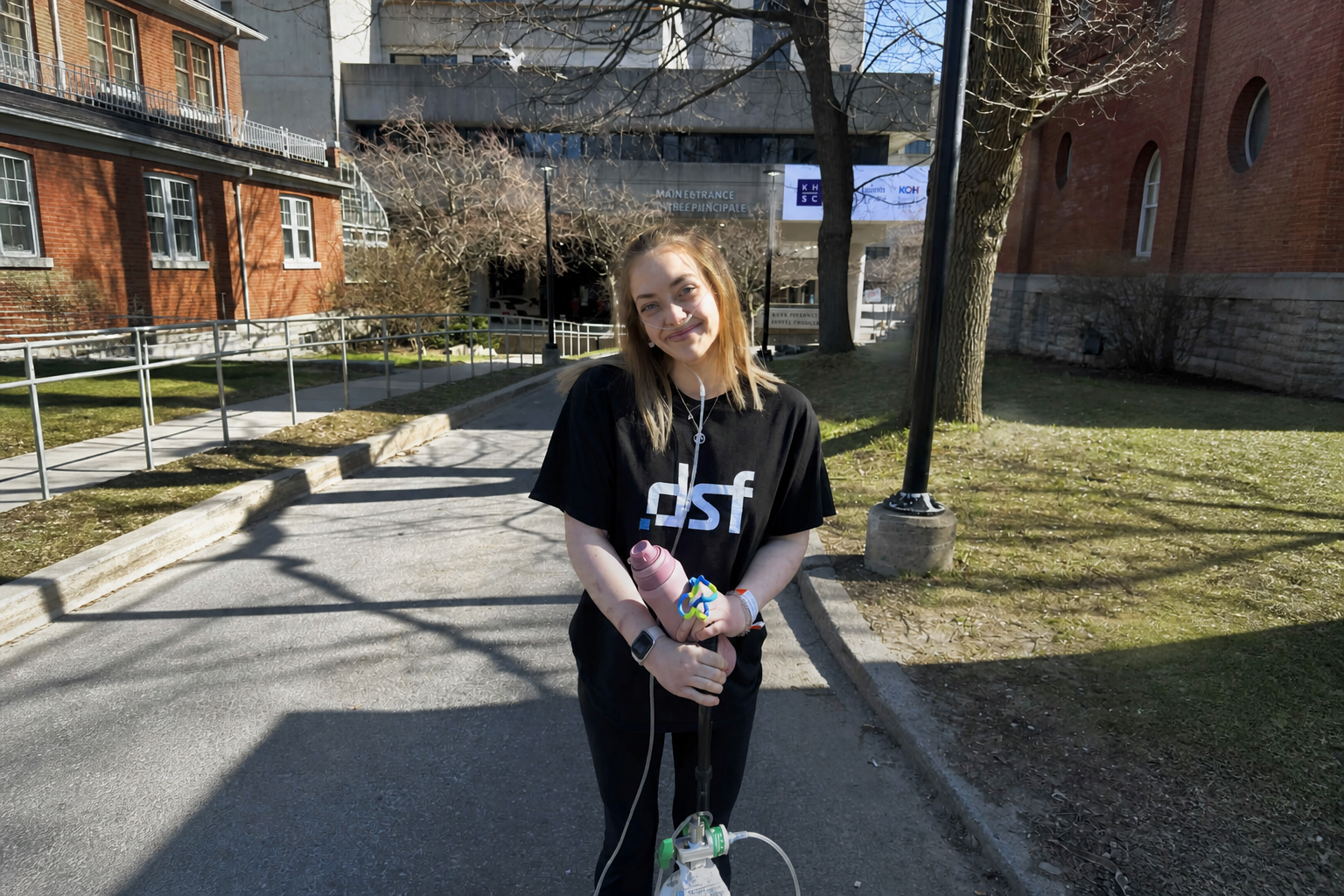
Les saines habitudes de vie avec la fibrose kystique: trouver un équilibre réaliste au quotidien
À 25 ans, Lex partage comment elle apprend à écouter son corps, à gérer son énergie et à trouver son propre équilibre avec la fibrose kystique, sans laisser la maladie définir qui elle est.
.jpg)
Aimer la vie et apprendre à la donner
Atteinte de fibrose kystique, Audrey refuse de se laisser définir par la maladie. Entre le deuil de son père, son combat pour la santé et son nouveau rôle de maman, découvrez le portrait d’une femme qui transforme chaque tempête en arc-en-ciel.