Interview with Jean-Christophe Réhel
In this interview, Jean-Christophe Réhel discusses the genesis of What we breathe about Tatouine, the place of cystic fibrosis in his writing, the balance between fiction and autobiography, and the use of humor and popular culture to tell the story of the disease without reducing it.
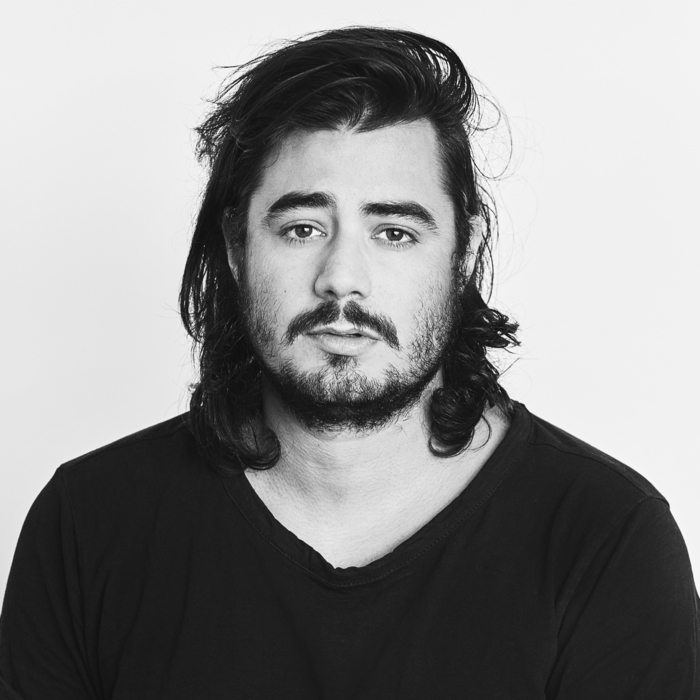
Interview with Jean-Christophe Réhel, author of the book: What we breathe on Tatouine
What motivated you to write this book?
Initially, I had an idea for a literary column, about a guy who chases flies in a tourist office, it was about thirty pages, so I thought it would be good to develop a story. I have always wanted to write about cystic fibrosis because it is a part of my life, and I don't know if I would have become an author or a poet without it, if I would have developed the same sensitivity about certain things. It feeds a lot of my inspiration, it is omnipresent in my practice. I have not yet gone through this subject, I have other projects related to the disease.
I also wanted to stage a sick main character, because most of the time, in works of fiction, sick characters “feed” healthy characters. I wanted to change this approach and do the opposite.
What is the autobiographical and fictional part?
There are autobiographical parts, in the sense that the character has cystic fibrosis like me. But as for life, I've never worked at Super C, I've never been to New York, I've never lived in an old toothless guy's basement, so there's a lot of fiction out there. I also don't have the same poverty issues as the main character, I'm not rich, but I don't live in a precarious situation. There is a lot of fiction, I did a lot of research, for example Super C, to find out what clerical work consists of, so that it corresponds to reality.
You were originally a poet, I imagine that writing a novel is a very different exercise. How did you experience it?
I already wrote a very bad novel in 2008. It was my first self-published novel, it was about 150 pages long, which I no longer assume, but I was starting out with this novel. Afterwards I moved on to poems. I like to compare novels and poetry to a horse in a meadow, the novel requires more development, more narration, it's a bit like a horse with hair and muscles, while poetry, I see it more as the spinal cord of emotion. With poetry, we get to the heart of the feeling. In my practice, poetry is more personal, written with heart and guts, while novels allow me to invent characters that I have never seen before.
How was your book received by other fibrocystic people? Have you had any feedback?
I received a nice compliment from a girl who was no longer doing her treatments, and who started taking better care of herself after reading: if the book was already able to be used for that, so much the better! Otherwise, I didn't get a lot of feedback from other fibrocystic people. The story is still fiction, and since it's art, it's still subjective. For some, it does not have to correspond to their reality, and that's okay: we all experience the disease differently and we all have a different experience. I try to do it with respect and truth, at least from my perception.
There are several scenes that depict certain difficulties of the disease, such as crossing the border, difficulties at work, poverty, the lack of knowledge of others about the disease (Akim who confuses it with multiple sclerosis), hospital stays, etc. Is there one in particular that you like?
I like it when he's back in the castle, and it's Christmas, (it's a bit pathetic, but I laugh at my own jokes), when the character vomits on the stairs. It still makes me laugh a lot thinking about it, but it's been some time since the book came out, we're still discovering it, but for me it's an old story. I don't keep a nostalgic attachment to my projects, I love the conception of the novel, but once it's published I look at something else. I never say to myself with nostalgia “Oh it was fun when I wrote that”.
When you read the book, you have the impression of being inside the character's head, you read their thoughts, you listen to their internal dialogue. For the part of the book that takes place in the hospital, I may be wrong, but I felt a kind of “acceleration” of thought, and slightly more incisive touches of humor. Is this a way to demonstrate how stressful a hospital stay can be?
I really hate the hospital. The feelings and anxiety that a hospital stay can represent are very autobiographical. The trigger was during a hospitalization where they thought I had cancer, it was very disturbing, and since then, every time I have to go to the hospital, I think about it again. The scene in the book is very much in line with how I feel about the anxiety of hospitalizations, just like my experience.
The character very frequently consumes junk food, Fast food, talk about alcohol and cigarettes. Is it a kind of “denial” for him about the disease?
As far as I'm concerned, I've never smoked, but I did it to make the story more exciting and spicy. A character who respected boundaries would have made for a less interesting novel. Then it's also the fact that in the fibrocystic community, there are all sorts of people, some of them don't listen to the advice of doctors. Perhaps I wanted to go a little deeper into this side of a character that goes beyond the correct side, to talk to the people who are struggling, to talk about a patient who is getting rid of it.
There are a lot of references throughout the story, pop culture references like Star Wars, of course, but also Die Hard, Super Mario Bros. 3 Or even the movie Our day will come. Can we consider that these are generational markers that would allow people of your generation, but not living with cystic fibrosis, to identify themselves? Or are they fan references?
I am a fan of popular culture, I consume it a lot. I know that in some critical circles of the intelligentsia, it's a bit less impressive, but I completely assume that I'm not done talking about popular culture. I love arthouse cinema as much as with popular cinema. A story, good or not, I wanted to fully assume that side.
You're referring to Chopin at one point, is it related to the possibility that Chopin had cystic fibrosis?
Yes, it's a small wink
Does the book Mountain and desert of cystic fibrosis does the character carry with him exist? Or is it based on an existing book? I looked for it, but I couldn't find it.
The title does not exist, but Mountain and Desert does exist, it is an edition with very beautiful photos. The main character, by changing the title, appropriated this book in his own existence, like Tatouine, but it is a book that exists.
Despite the subject of the book, there are many touches of humor, the use of analogies and comparisons being often one of the mechanisms, did you want to insert doses of humor in order to de-dramatize the subject? Or is it just your humor in real life?
I don't think I'm funny in real life, I'll never do a stand-up, but I think I'll be able to create funny situations in the story, I still do them today, I like to put on funny, funny situations: it's voluntary to keep a story bearable to read, because when you think about it, the plot of this story is very dark, but with a touch of humor everything goes better.
Are you considering writing a sequel? Or maybe a prequel?
No, I am not very “following.” I am working on other projects, related to the FK, but I cannot talk about them at the moment. I didn't go all the way around this topic, but I would like to approach it in an even funnier way.
I saw that a movie was being prepared. Can you tell us more?
I have little information, and I am waiting for the first version of the script. Cinema is a long process, with big teams, astronomical budgets compared to the budget of a book. I'm more or less in control, and I don't know the release date, but I can't wait to see that.
Are we going to see you there?
Maybe I could play Amidala, I asked I'm waiting for their response.
Would you have liked to discuss something else?
There are lots of subjects that I am passionate about, but so far I have not covered cystic fibrosis. I have other topics to talk about next. For example, in 2019, I published a poetry book about a young boy who goes from elementary to high school and who is anxious. I had a lot of fun writing this collection. I have other project ideas, but it may be related to schizophrenia, Alzheimer's, or other. For me, illness is a pretty incredible source of inspiration, I don't know if one day I'll be able to get rid of it, to talk about a story where no one is sick, I don't know if that would be interesting, from my point of view.
Thank you so much for answering our questions!
Interviews and testimonies
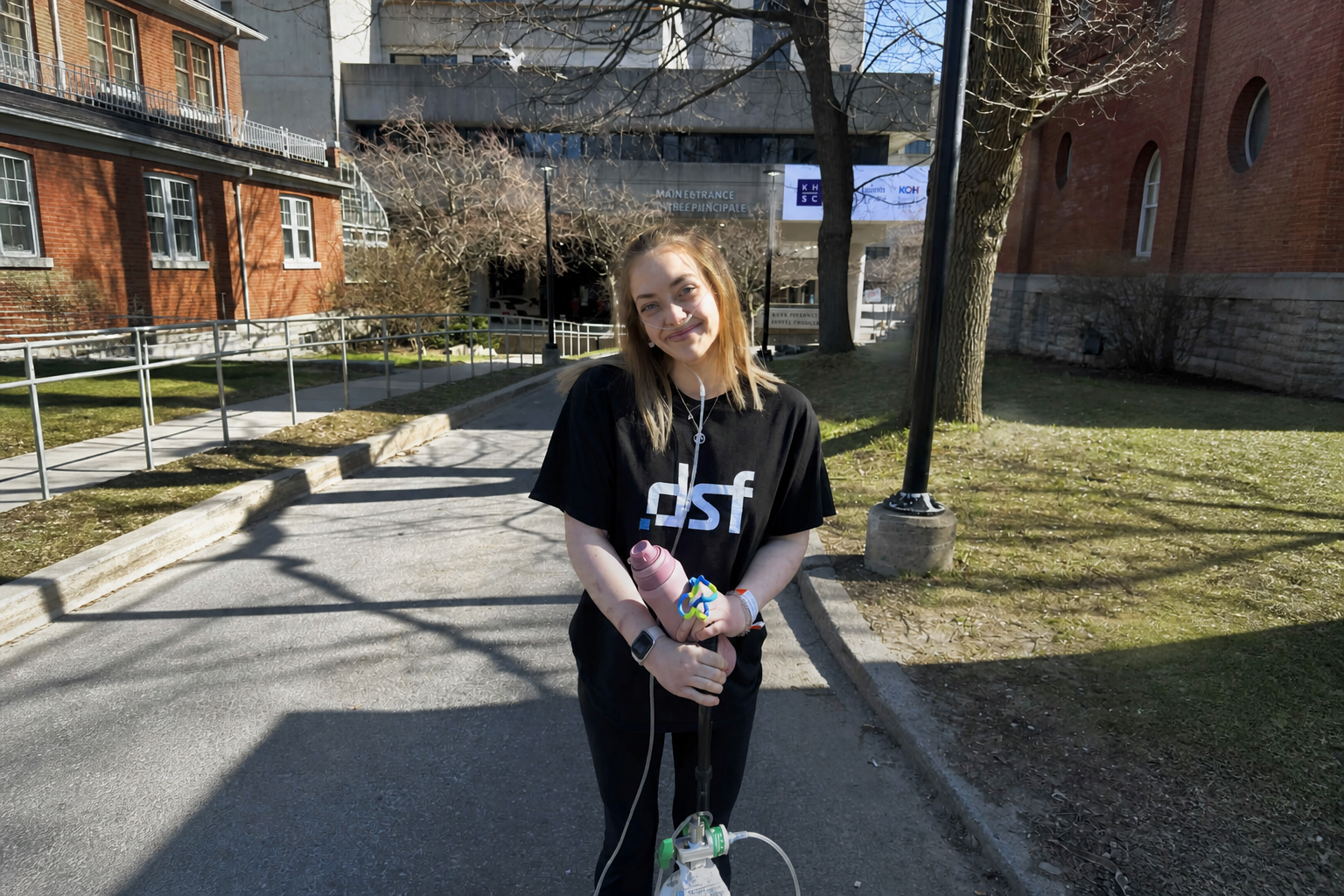
Les saines habitudes de vie avec la fibrose kystique: trouver un équilibre réaliste au quotidien
À 25 ans, Lex partage comment elle apprend à écouter son corps, à gérer son énergie et à trouver son propre équilibre avec la fibrose kystique, sans laisser la maladie définir qui elle est.
.jpg)
Aimer la vie et apprendre à la donner
Atteinte de fibrose kystique, Audrey refuse de se laisser définir par la maladie. Entre le deuil de son père, son combat pour la santé et son nouveau rôle de maman, découvrez le portrait d’une femme qui transforme chaque tempête en arc-en-ciel.