The approval of Trikafta
The addition of Trikafta to the RAMQ in September 2021 marks a major advance for cystic fibrosis in Quebec by making available a treatment that acts on the cause of the disease for eligible people.
Interview with Kim Steele, Director of Government and Community Relations, and John Wallenburg, Chief Scientific Officer, from Cystic Fibrosis Canada
Interviewed by Sébastien Puli and Cateryne Rheaume in October 2021
On September 28, 2021, after years of hard work on the part of the entire fibrocystic community, the Régie d'assurance Maladie du Québec (RAMQ) finally added Trikafta to the list of medications covered by the Quebec General Drug Insurance Plan, i.e. those whose expenses are reimbursable. Kim Steele, Director of Government and Community Relations, and John Wallenburg, Chief Scientific Officer, and John Wallenburg, both from Cystic Fibrosis Canada, agreed to answer our questions and to look back on this long journey.
Hello both of you, thank you for taking the time to answer our questions.
First of all, what is the “Trikafta”?
JOHN WALLENBURG: Trikafta is the third generation in a class of drugs called “CFTR modulators.” CFTR is a protein and is the product of the cystic fibrosis (CF) gene. People with CF have mutations in this gene and this creates a protein that is not well manufactured. The protein manufacturing process is deficient. And the most common gene mutation, F508del, doesn't work well even though the CFTR protein is actually made by cells.
How is it a major advance in the treatment of cystic fibrosis?
JOHN WALLENBURG: It's a major breakthrough because, in the past, all the progress we've made
in the treatment of cystic fibrosis consisted in treating the symptoms of the disease. It's completely different with CFTR modulators. This type of medication fixes the biological problem that underlies the disease. Trikafta makes protein production work better, and it also makes the protein work better once it's made. So, rather than treating the symptoms that result from the faulty manufacture or absence of CFTR, we are trying, in a certain way, even imperfect, to prevent them from forming.
Why is it important to include Trikafta on the list of drugs covered by the RAMQ?
KIM STEELE: Because this medication is the biggest innovation in the history of cystic fibrosis care. Trikafta is a transformative and revolutionary medicine! It allowed people to be removed from the lung transplant waiting list and get on with their lives. In addition, it is a medication that treats many of the symptoms that people with CF suffer from every day. It will definitely change the face of CF in Canada and Quebec.
JOHN WALLENBURG: Another important consideration is the economic issue. Thanks to the exceptional patient measurement, some people already had access to Trikafta or other modulators. Since Trikafta was not on the list of drugs covered by RAMQ and no negotiations were made with the manufacturer as to its purchase price, the government paid full price. Now, with official registration, the government and the manufacturer have negotiated a downward purchase price. This agreement remains confidential.
Who will be able to benefit?
JOHN WALLENBURG: Trikafta can only work if the patient has a certain mutation. Currently, there is only one mutation that is approved by Health Canada, F508del. So only people who have at least one copy of this mutation can use this medication. It is known that Trikafta may work for other mutations, but these are not yet approved by Health Canada.
We will continue to advocate with Health Canada and the manufacturer to ensure that as many people as possible can have access to Trikafta.
It is also important to note that there is a certain percentage of people with CF who cannot
benefit from no modulator. These patients have particular mutations and, in their cases, the protein
CFTR is completely absent. For them, modulators don't work, because there's no protein to act on. Among other things, this is one of the reasons why research is so important. For these people, there are other treatments to develop.
What was FK Canada's role throughout the approval process?
KIM STEELE: The United States was the first country to approve Trikafta two years ago. At the time, we hoped that the drug would arrive in Canada fairly quickly, but that was not the case. There were a lot of obstacles. Regulatory changes that foreshadowed a very significant reduction in drug costs in Canada, such as Trikafta, were under way at the federal level. We knew that if this regulatory reform passed, there was a good chance that the manufacturer of Trikafta would not even submit the drug for review in Canada. So we had to fight against these changes and luckily we were able to get them postponed. Finally, they will be implemented in January 2022, which allowed Trikafta to be admitted under the old regulations.
Subsequently, Trikafta went through an accelerated approval process by Health Canada and through a cost-effectiveness evaluation process by the National Institute of Excellence in Health and Social Services of Quebec (INESSS). Thirty days after the INESSS recommendation was sent to the Minister of Health and Social Services, the province started funding Trikafta. It's really unprecedented! It is extremely fast, but at the same time too slow, as we lost people along the way. How does the approval process and the inclusion on the list of drugs eligible for reimbursement take place?
KIM STEELE: First, Health Canada needs to approve the drug for safety, effectiveness, and quality. We want to make sure that it does more good than harm, that it does what it's supposed to do to treat the condition, and that it's made up of the ingredients it's supposed to contain. For Trikafta, since its review was expedited, this part of the approval process took six months.
Then, the drug is submitted to INESSS in Quebec for a pharmacoeconomic analysis. This process has also been accelerated in the case of Trikafta. This is the first time this has happened for a cystic fibrosis medication. Then INESSS makes a recommendation to the Minister of Health and Social Services who has 30 days to ratify it.
Now that the costs of Trikafta are reimbursed by the RAMQ, you can get the medication, but only if you meet Quebec criteria. And that's where people could get in trouble. In fact, Quebec adopted the INESSS recommendation setting the maximum threshold for measuring an applicant's lung function at 90% in order for them to have access to the medication. Thus, a person with a lung function of 90% or more will not be able to obtain Trikafta through the measurement of exceptional medications. On the other hand, she could obtain it through the exceptional patient measure by submitting a request with the help of her clinician. These requests are evaluated on a case-by-case basis.
So we encourage people to talk to their clinicians about it. To get Trikafta, people with cystic fibrosis need to have a test to measure their lung function. The clinics that offer these tests are busy, but they are setting priorities. With the results in hand, clinicians will be able to help their patients determine if you are eligible for the Exception Drug Measure or if you should apply under the Exception Patient Measure.
What were the main difficulties encountered during the discussions?
KIM STEELE: I've already talked about regulatory changes at the federal level. To successfully postpone the entry into force of these changes, it was a major battle across Canada. In spring 2020, we launched the “#laFKnattendpas District Challenge” from coast to coast. As part of this challenge, we met with 40% of parliamentarians across the country. It was quite phenomenal! People like you and I went to talk to their elected officials to explain to them the impact of decisions made by the federal government on the Canadian CF community.
We had various working committees and a multi-party committee on emergency access to Trikafta with federal MPs. We did a lot of media relations in Quebec, in all regions. In addition, we wrote letters and launched petitions.
So it was a big fight with a multitude of actions to take to get to where we are. After all this hard work, we are very happy that the Canadian provinces have chosen to take action and provide access to Trikafta to the CF community.
Now, we need to make sure that in the future, the processes will not be as long and that the federal and provincial governments have a strategy for rapid approval by the authorities and for quick access to drugs to treat rare diseases, such as Trikafta.
What convinced Quebec to add Trikafta to the list of drugs covered by RAMQ?
KIM STEELE: Managers of public access to medicines programs and ministers made decisions based largely on evidence. However, this does not mean that these data are always well interpreted. Defending the rights of people with CF in collaboration with our clinicians is therefore always necessary.
We did not like the first draft regarding the reimbursement of Trikafta. The criteria were too restrictive. So we lobbied and we got changes from INESSS. It is essential to let CF experts decide who should have access to Trikafta.
What about other provinces in terms of access to this medication?
KIM STEELE: Things are changing rapidly, but I can say that currently all ten provinces and Yukon have confirmed the reimbursement of Trikafta. Only the Northwest Territories and Nunavut have not yet voted.
Interviews and testimonies
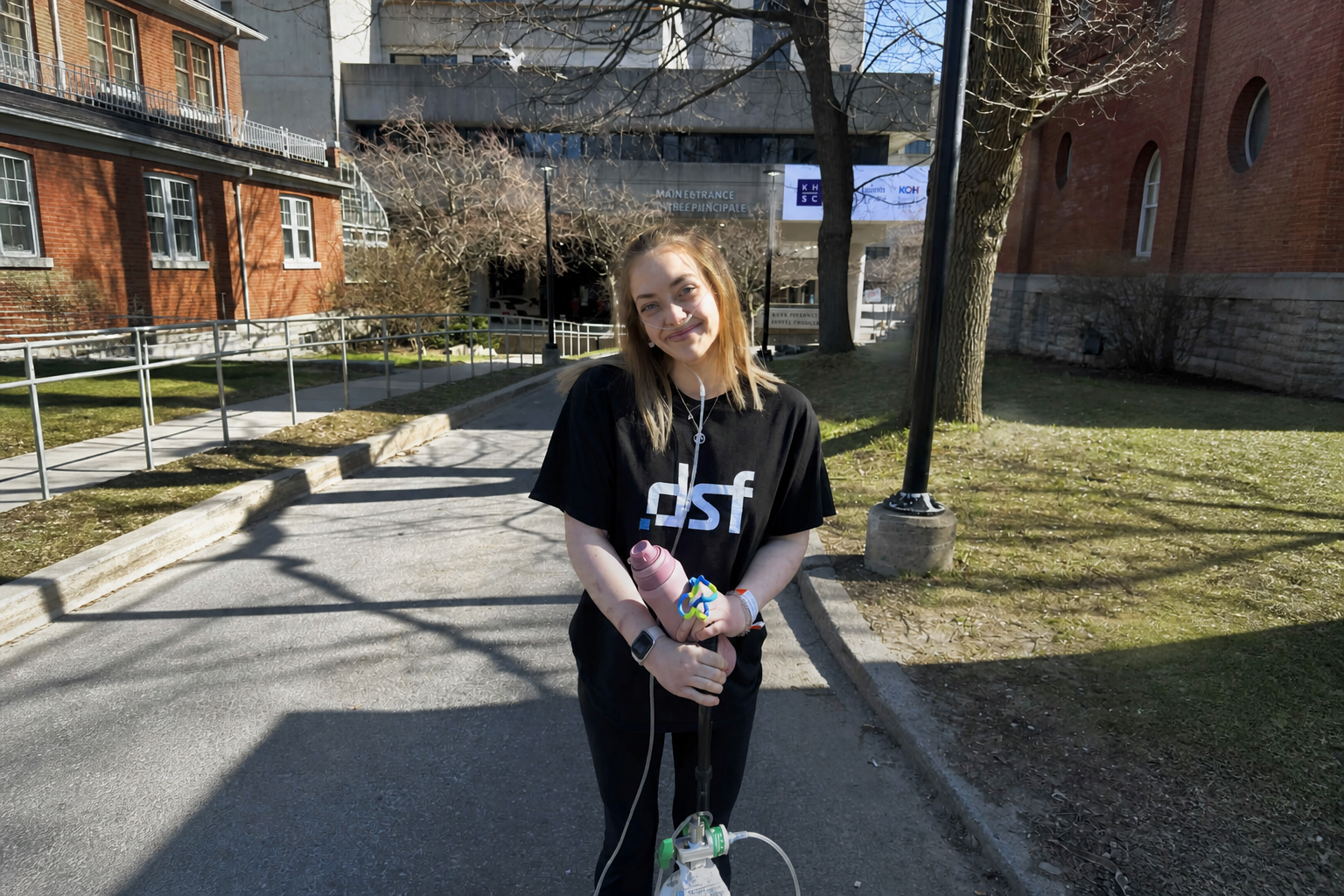
Les saines habitudes de vie avec la fibrose kystique: trouver un équilibre réaliste au quotidien
À 25 ans, Lex partage comment elle apprend à écouter son corps, à gérer son énergie et à trouver son propre équilibre avec la fibrose kystique, sans laisser la maladie définir qui elle est.
.jpg)
Aimer la vie et apprendre à la donner
Atteinte de fibrose kystique, Audrey refuse de se laisser définir par la maladie. Entre le deuil de son père, son combat pour la santé et son nouveau rôle de maman, découvrez le portrait d’une femme qui transforme chaque tempête en arc-en-ciel.