Putting people at the heart of care
An interview that highlights the key role of social work in the psychosocial support of people living with cystic fibrosis.
Interview with Marie-Ève Major
Social worker at the CHUM cystic fibrosis clinic
In January, you succeeded Laval de Launière as a social worker at the Hôtel-Dieu cystic fibrosis clinic. Can you tell us about your background?
Of course. I started my career working as a psychosocial worker in a home for women in difficulty while studying for a bachelor's degree in social work at UQÀM. In 2011, I completed an internship at the psychiatric clinic at Notre-Dame Hospital. After graduating in May 2012, the CHUM hired me to work in physical medicine. I worked in several medical specialties before being recruited by the pneumology team at Hôtel-Dieu in the summer of 2013. Over the years, I developed a good relationship with the doctors and professionals at the cystic fibrosis clinic, so when Laval de Launière announced his departure, I expressed my interest in replacing him.
How do you see your role in the clinic?
The main role inherent in my profession is to support and restore the social functioning of the person in order to promote their development in interaction with their environment. As a social worker, I strive to support individuals and families through the trials of life, by providing listening, support, and assistance in making decisions as well as in finding solutions. I remain deeply convinced that each person has the strengths and skills they need to make positive changes in their situation. I think that my main role is to promote the emergence of these forces through my interventions. Secondly, I consider that the role of a social worker within a multidisciplinary team is to highlight the psychosocial context of patients so that it can be taken into account. In this way, I humbly hope to contribute to the humanization and personalization of the health care offered at the clinic.
How was your first contact with people living with CF? Did you have to change your usual approach, to adapt it?
From my first meetings, I felt that the bond of trust with this new clientele was going to be created very easily. First of all, I was wonderfully welcomed, despite the feeling of sadness shared by many, in connection with the departure of my predecessor, Laval de Launière. People were empathetic and understanding towards me, which was very helpful. Then, I was struck by the diversity of perceptions and experiences of the disease that differ enormously from one person to another. Sometimes there are similarities in the trials people have had to go through, or in the survival strategies that have been used to overcome them, but each person is inherently unique and goes through their journey of accepting the disease differently. This reality makes my work all the more stimulating and interesting.
As for the need to adapt my approach, I think that the basic principles that have guided my practice since I started working in the hospital context remain the same; each person is the master of their own life and the expert in their situation, each person has within them the necessary strengths to make positive changes, the human person is a complex entity that should in no way be defined by a medical diagnosis. What is different from my previous assignments is that in the context of the outpatient clinic, I now have the chance to create a real relationship of trust with patients, an element that I believe is essential for changes to be made.
What do you think are the main challenges facing those living with CF?
According to what has been reported to me so far by customers, the main challenges associated with living with cystic fibrosis would be related to the acceptance of the diagnosis, the cumbersome daily treatments, employability, economic precariousness, food insecurity, food insecurity, food insecurity, food insecurity, stigma, stigma, stigma, stigma, male infertility, male infertility, work-family balance, as well as the psychological distress experienced by many in the face of the uncertain nature of their future. Luckily, all adults with cystic fibrosis have something in common. An absolutely incredible resilience that allows them to face these challenges day after day. I feel privileged to be able to accompany them through the most difficult times and to see them reborn, days, weeks or months later, with a new spark in my eyes.
Soon, the clinic will move to the new CHUM facilities. Some people have expressed concerns about this move. What can you say to these people to reassure them?
I think it is normal to have fears and apprehensions in the face of such a change, especially for those who have been treated at the Hôtel-Dieu clinic for several decades. It has been proven that changing your living environment is as psychologically traumatizing as going through a divorce or the loss of a loved one. We will have to go through this period of adaptation together, as much for doctors and professionals as for customers. One thing is certain, improving the quality of life of patients at the CHUM Cystic Fibrosis Clinic is and will always remain our priority as a team. I encourage everyone to feel free to share their concerns during their follow-up visits. Sometimes just talking about it can reduce anxiety.
Interviews and testimonies
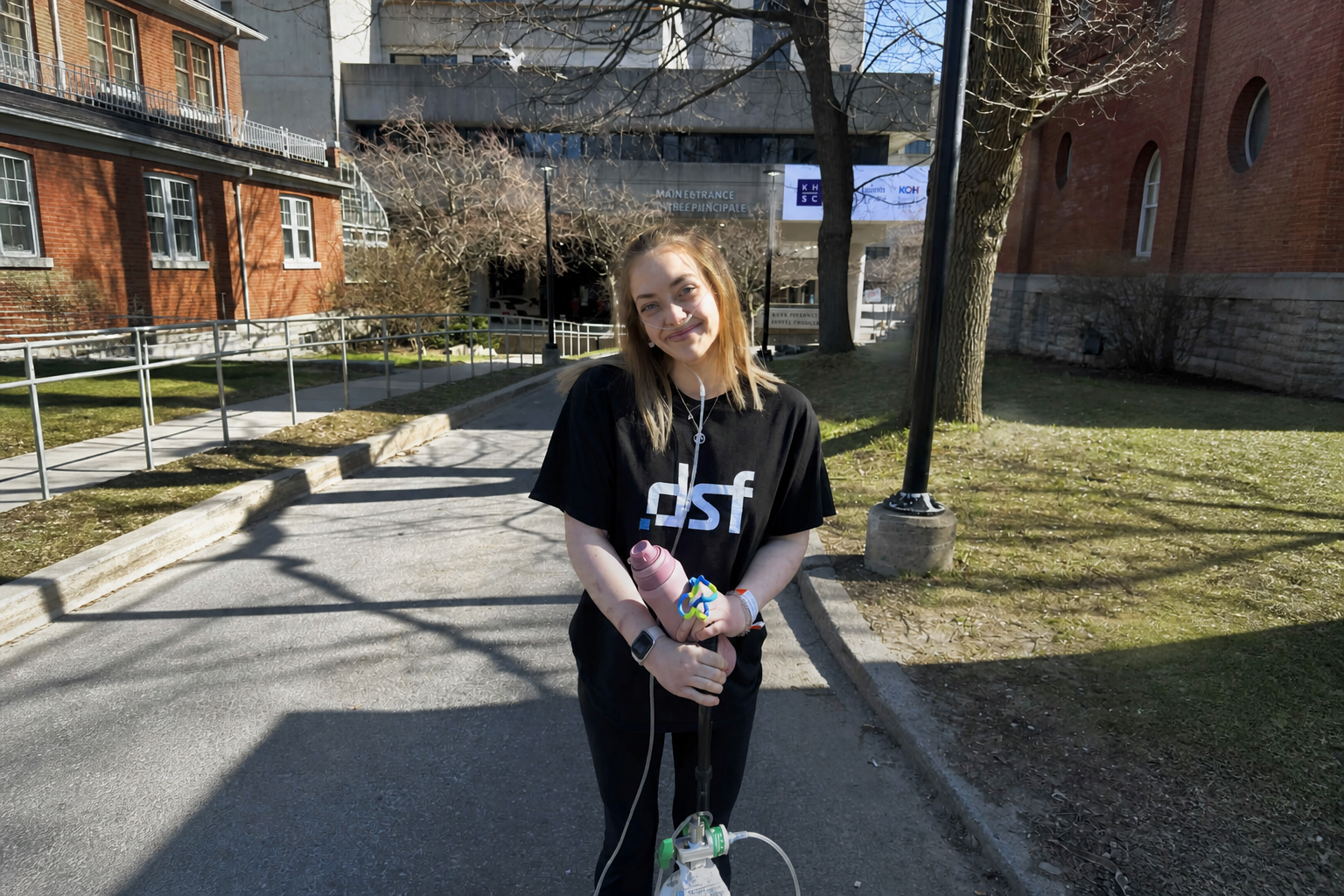
Les saines habitudes de vie avec la fibrose kystique: trouver un équilibre réaliste au quotidien
À 25 ans, Lex partage comment elle apprend à écouter son corps, à gérer son énergie et à trouver son propre équilibre avec la fibrose kystique, sans laisser la maladie définir qui elle est.
.jpg)
Aimer la vie et apprendre à la donner
Atteinte de fibrose kystique, Audrey refuse de se laisser définir par la maladie. Entre le deuil de son père, son combat pour la santé et son nouveau rôle de maman, découvrez le portrait d’une femme qui transforme chaque tempête en arc-en-ciel.