Testimonial: Obstacles that seem insurmountable
A testimony on the late diagnosis of cystic fibrosis, motherhood, hospitalizations and learning to live differently.
It is for people who have the strength to do it that life poses the most difficult obstacles to overcome!
My name is Vanessa Anselmi and I am 32 years old. In April 2009, when I was 28 years old, my life was the result of a completely normal journey. I worked in a job tailor-made for me in the construction sector — a house painter —, I owned a house, I had a spouse I loved by my side, and I was on the way to becoming the most beautiful thing in the world: a mom. That was when the crucial stages of my life were about to begin.
The beginning
During my delivery, the hospital pediatrician noticed that I was short of breath and that my fingers were rounded, which sounded the alarm about my health condition. After multiple tests, the diagnosis was made: cystic fibrosis.
What? Me? At my age?
After the strong emotions caused by the death of my father, a few months earlier, and those related to my birth, I now had to deal with my own illness, which is not an easy one. At the time of diagnosis, my FEV1 (maximum exhalation volume per second) was 56%. Everything went wild in my head and the famous question appeared: “Why me? ”.
Being at a stage in my life where everything revolved around my baby, I then questioned myself a lot about my role as a mother. Will I be able to raise him properly? For how long? Will I live long enough to see him grow up? A wind of bad luck had fallen on my perfect little nest.
During the first few months after my diagnosis, I often woke up at night thinking, “I don't want to die! ”. I have thought a lot about death. It scared me extremely, especially for someone who had just lived 28 years of his life thinking about aging normally and ending his life around 80... Besides, strangely enough, I felt a certain hate for old people. Maybe because I was envious of them for being able to go so far. I didn't even look at them anymore when I was walking down the street or at the mall. I did everything I could to get away from them. I was mad at them.
It was difficult for me to come to terms with the disease, as I had had a completely normal childhood. No symptoms, always in good shape, no recurrent episodes of taking antibiotics and, above all, full-time sports. There is no sign of this disease in my family. My thoughts then turned a lot to my childhood, when I was in elementary school. I remembered the little boy giving us presentations about his disease, cystic fibrosis. At that very moment, I thought this little boy was very courageous and I had no idea that I would go through the same steps as him several years later. Also, with my friends, we often laughed at my slightly special fingers, but without asking each other any more questions. Nor the doctors for that matter...
Today, I look back on the hustle and bustle of the year and realize that because my diagnosis was made immediately after my child came, I only have a vague memory of the good times spent with my baby. My mind was obsessed with the disease. Whether it was rocking my baby, changing his diaper, putting him to bed, or giving him a bath, I thought about it all the time. I watched it for a long time and felt a lot of pain. I was happy and unhappy at the same time.
Shortly after, I had to have my baby take a sweat test; it was an extremely difficult time. I didn't want to live in doubt, not knowing if he was sick too. I will always remember the 15 minutes it took to get the results. It was the longest 15 minutes of my life. I could not see myself managing my condition and the effects of the disease at the same time as caring for my baby. The wait and the pressure finally came down when we got the test result: negative.
At the start of a new life, I felt extremely alone, even though all my loved ones were very present for me. I told myself that they could not understand. My life was changing all the time and I didn't want people to see me as different, different. I didn't want to get pity from people either. I asked myself a lot of questions, I was doing a lot of research to find out more about the disease. Before working in the construction sector, I studied animal health. Our biology courses were based on living beings — whether animal or human — because, at their core, animals and humans are alike. So, I fully understand all the medical terms used by doctors and in the scientific literature. As someone who always wants to know more, my goal was to gather as much information as possible about the disease. On the other hand, while doing my research, I have experienced fear and concern several times. The question that bothered me most often was, “What will happen the day my bacteria are resistant to antibiotics?” ” There are a lot of types of antibiotics, but some bacteria are only sensitive to a few of them.
The storm
Around six months after the diagnosis, I ended up in the hospital with an FEV1 of 27%. Three weeks later, my body reacted poorly to the new antibiotics and I had to go back due to a drug-induced rash called “DRESS” (Drug Rash with Eosinophilia and Systemic Symptoms), an allergy that also affects other vital organs. In my case, the kidneys and liver were affected.
That year, I was hospitalized five times. As you can imagine, I found it very difficult. When I first went to hospital, my baby was just one year old. I cried a lot; I was bored of him and I was afraid that he would forget me, that he would not recognize me. Frustration, fear that I often covered up with jokes, and acceptance were a succession of stages that I had to go through during these endless stays. I was upset that I had to go to the hospital regularly and tell my full story to each new doctor I saw. Also, I was always a bit afraid to know the results of my breath tests.
Luckily, I consider myself to be a strong person and I think that was a big part of what saved me from this nightmare. Despite everything I was going through, I always kept my spirits up and tried to stay positive as much as I could. I had two choices: either to be depressed every day, or to get up and see the disease differently. I made my decision quite quickly — there was no way this disease would ruin everything I had achieved so far! I have always been a smiling person who loves life, that was not where that was going to change! A very small opening to discouragement and that would be a disaster, so there was no question of it. I kept saying to myself: “All these hospitalizations are for my own good.”
It's all a matter of perspective. The good aspects of the disease are becoming rare, but for example, being a person who loves plenty of food, eating as I please and as many calories as possible is one! To hell with the diet! As someone who had always eaten more than normal while maintaining a slim figure, everything was explained. Today, I can eat my fill without anyone asking questions...! In addition, during these hospitalizations, I met generous people who took the time to help me learn more about the disease. They have in a way transformed the longer time into more pleasant moments.
However, when I was beginning to get used to the idea that I was ill, only a year after my diagnosis, the doctors told me that I should consider taking the necessary steps to get a lung transplant, because my lungs did not want to go up the slope. Whew! The storm continued! When the nurse brought me the transplant documents, I remember thinking, “God, what is happening to me? ”. I was in shock, but I didn't want to let it appear. Obviously, I wasn't considering refusing the transplant, but on the other hand, I didn't feel completely ready to deal with all of this. It was a big thing and I thought about it all the time.
A new hope
In the meantime, before I had my appointment with the transplant clinic, the doctors changed my antibiotic cocktail. Slowly, my FEV1 was rising. When I went to the Notre Dame Clinic, it had become too high for me to be on the emergency list. So I left the clinic with a new hope of being able to postpone all these steps until later. And as a matter of fact, a few months later, my FEV1 was back to its original value, around 55%. After giving up all my sports activities during the last year, I was able to gradually resume them. I continued to be very thorough in my aerosol treatments and physiotherapy. My spirits soared and I had time to deal with all these events that had happened in the space of a year.
I am aware that I was lucky enough to live a young life without illness, but it is still difficult for a person who believes they are healthy to have to suddenly face a serious and degenerative disease such as cystic fibrosis. Most of the other sufferers have been able to cope with the disease throughout their lives, while I have had to deal with it suddenly and quickly. As adults, we are much more aware of the challenges we face. It's in moments like these that you achieve a lot. When I left the hospital, between treatments, I enjoyed all the forms of beauty around me. I looked intently at the trees, the sky, the sunny lawn. I was breathing deeply and it made me feel good. I think it's a shame that we only know how to truly appreciate the beauty of life when we are experiencing serious events. The majority of people forget to live in the moment. Unfortunately, I was one of those people before my diagnosis and now I see things quite differently. The disease has opened my eyes to a lot of things.
Today, my hospital visits are becoming less and less painful; the team is very generous, caring and understanding. I feel privileged to be around people who offer us such great support. There are days when I forget about the disease and tell myself that I am still the same girl as before. Most people I meet tell me that I don't look sick and I am very proud of that. I am very happy despite my health condition. When I hear my boy say to me “Mom, you are the most beautiful in the whole world! or “Mom, I love you!” ”, these are the most beautiful moments of my life. I want to live a long time to get to know even more. I have confidence in research and above all I have confidence in life...
Interviews and testimonies
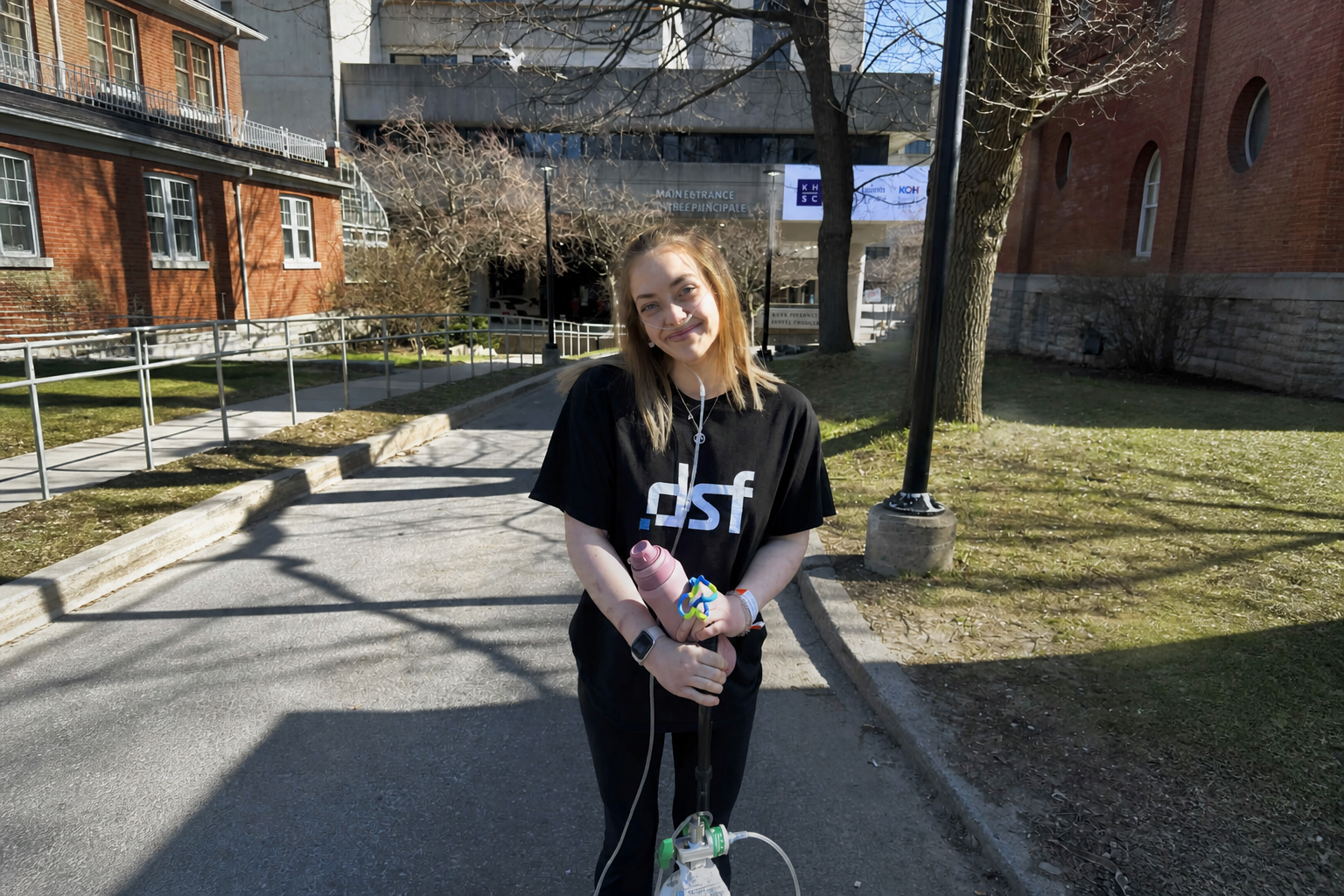
Les saines habitudes de vie avec la fibrose kystique: trouver un équilibre réaliste au quotidien
À 25 ans, Lex partage comment elle apprend à écouter son corps, à gérer son énergie et à trouver son propre équilibre avec la fibrose kystique, sans laisser la maladie définir qui elle est.
.jpg)
Aimer la vie et apprendre à la donner
Atteinte de fibrose kystique, Audrey refuse de se laisser définir par la maladie. Entre le deuil de son père, son combat pour la santé et son nouveau rôle de maman, découvrez le portrait d’une femme qui transforme chaque tempête en arc-en-ciel.