Testimonial: Genetics: assessing risks before starting a family
When living with a genetic condition such as cystic fibrosis, the desire to have a child involves a profound reflection on the risks of transmission, informed by medical genetics and personal choices.
Of course, when you have a genetic disease, you must assess the risks of giving birth to a sick child.
To have CF, both parents must carry the defective gene and pass it on to the child. So you will have understood, as I am sick, I have the 2 defective genes, so I automatically transmit 1 to my child.
The first step, therefore, was to have my boyfriend take genetic tests. Not too complicated: a blood test, 3 months of waiting. Since I myself have the disease and not just a carrier, the specialists decided to look, in my boyfriend, further than the 25 most famous mutations.
When the results are ready, you have to meet with the geneticist. We understand, when we arrive in the office, that it will not be as easy as we would have hoped. It seems that my darling has a CF mutation, but a little-known mutation. According to the geneticist, the combination of my mutation (double DeltaF508) and that of my boyfriend would give an unknown result. I am not telling you all the scenarios that were created in my head, I even imagined a child to be born without lungs.
After this extremely disturbing news, my boyfriend and I are going to dinner at the restaurant. Discussion that will remain etched in my memory: I saw all the negative aspects of this news, and he saw all the positive aspects! Well yes, for him there were some positive ones: it was not a known mutation, so not one that is found in people who are generally ill. But hey, despite our differences of opinion on the subject, what do we decide to do? Taking a risk? It was too big a decision for me to pass on this crappy illness to a child who didn't ask for anything.
My primary physician (a pulmonologist), who is also a renowned researcher in the field of cystic fibrosis, was a great source of comfort. Here is his response:
“This is a newly observed variant, but it is not expected to have a major impact on CFTR gene function (Cystic fibrosis transmembrane conductance regulator). A colleague writes to me: “To my knowledge the altered “T” has not been implicated as part of any consensus binding site and The Change Is Not Expected to Have Any Functional Consequences.” He does not believe that this variant has a harmful effect. At most, this variant combined with the ∆F508 you're carrying could result in a child with a mild form of CF — but even that would be unlikely.”
So we assessed that the risk of giving birth to a child who would suffer from CF for the rest of his life was quite low...
We then embark on this beautiful life project!
Interviews and testimonies
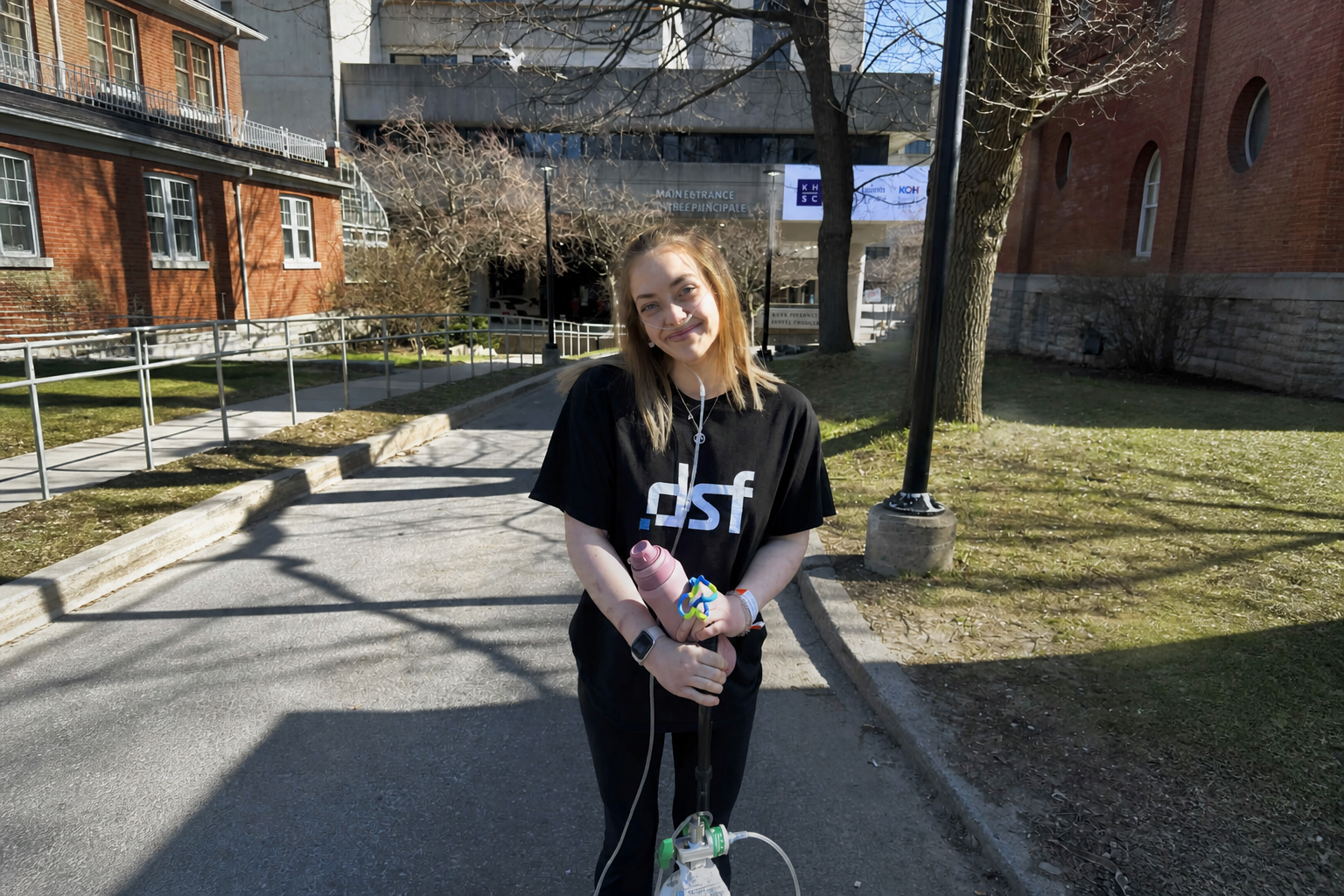
Les saines habitudes de vie avec la fibrose kystique: trouver un équilibre réaliste au quotidien
À 25 ans, Lex partage comment elle apprend à écouter son corps, à gérer son énergie et à trouver son propre équilibre avec la fibrose kystique, sans laisser la maladie définir qui elle est.
.jpg)
Aimer la vie et apprendre à la donner
Atteinte de fibrose kystique, Audrey refuse de se laisser définir par la maladie. Entre le deuil de son père, son combat pour la santé et son nouveau rôle de maman, découvrez le portrait d’une femme qui transforme chaque tempête en arc-en-ciel.