Testimonial: When science meets hope
A touching testimony on in vitro fertilization, infertility linked to cystic fibrosis and the long road traveled to realize the dream of becoming a parent.
A testimony from Martin Lemire
I've always dreamed of being a father, and for me, it didn't matter which way I chose — adoption, children by a spouse, or artificial insemination. I had the pleasure of meeting the most wonderful person there was on my way: my spouse Isabelle. At the beginning of our relationship, I did not know if it would be possible for me to have children naturally. Since Isabelle also wanted children, after a few months of dating, I had a spermogram. Since my condition was mild, I hoped to be part of the 2% of adult men with fertile cystic fibrosis. Unfortunately, I was disappointed the day the doctor called me to give me the results: it's hard to beat the statistics. For her part, Isabelle passed the genetic screening test to find out if she was a carrier. Good news: she did not carry the most common cystic fibrosis genes in Quebec and Canada.
We let a few years pass before starting our procedures in a fertility clinic. The first encounter was promising, and we were told what we already knew, namely that we had three choices: adoption, artificial insemination of donor sperm, or in vitro fertilization. Since Isabelle wanted a child from me, I then had what I thought was a magnificent idea, but one that was not shared by my spouse: given my striking resemblance to my father, why not inseminate my father's sperm? My wonderful idea did not last long, because Quebec law prohibits this kind of practice. Looking back, I admit that this was not really a good idea for several reasons, including moral considerations. So we left this visit with all the information we needed and took a year to think about the issue.
This reflection led us to visit another clinic, namely the OVO Fertility Clinic in Montreal. From the first contact, we felt extremely comfortable and confident; it was in April 2005. The meeting with the doctor was rewarding and we decided to embark on the adventure of in vitro fertilization. A few days later, we started the process with great enthusiasm. It all started with blood tests for my partner and me, and an ultrasound of my spouse. This first stage went very well. Before returning home, in Temiscamingue, we made a second appointment to take the next step, which included meetings with the gynecologist, urologist and geneticist.
A second trip to Montreal was therefore undertaken in May. The meeting with the gynecologist was positive; everything was smiling at us. The one with the urologist was more stressful, but according to him, there was sperm in the epididymis, and the vas deferens was absent. Relief: everything was still going great. On the other hand, the encounter with the geneticist shook us a lot. Indeed, as he wanted to make sure, before we continued our efforts, that our future child did not have cystic fibrosis, he submitted to us the idea that as “responsible” parents, we should ensure that Isabelle undergoes the sequencing of the cystic fibrosis gene. This is a more advanced test that checks if a person does not have one of the many cystic fibrosis genes found in North America. In addition, you have to wait three to four months before getting the results. We were extremely sad and disappointed because we had planned to do the in vitro cycle in July, when I had already planned my vacation to make it easier for us to travel. Our plans were shattered. My spouse, somewhat rebellious, said to me: “Why is it so difficult to have children? Why can't we have them naturally.” We went home heartbroken.
At the beginning of June, Isabelle took the blood test for sequencing at a hospital in the region. And now, the day before our vacation, we received an unexpected call from the geneticist: the results were perfect. According to him, the risks of having a child with cystic fibrosis were almost zero. We were so happy! We immediately contacted the OVO Clinic to tell them that we wanted to start the in vitro process, because, as if by magic, my partner was at the right time in her menstrual cycle. We were at the height of happiness. We were encouraged by those around us, although some did not quite agree, as the process can be difficult for the woman's health and difficult for the couple. Moreover, the process is expensive and the results are not guaranteed. Nonetheless, after we reassured them, they all supported and encouraged us all to the fullest. So we went to Montreal and, a few days after starting to take medication, we went to the clinic. All the professionals (doctors and nurses) were very welcoming and were available to answer all our questions and concerns. They told us that the process would take six weeks. We started the in vitro adventure confident and hopeful, while remaining realistic; we were aware of all the possibilities.
We came home loaded with tons of medication and with great hope. Given the significant distance between our place of residence and the clinic, the clinic facilitated the process by having us take tests in the regions. The first medications given were tablets, but the next drugs had to be injected, which made the treatment painful. We were worried and stressed at the same time. We then got ready to go back to Montreal, because for the last two weeks, we had to be near the clinic. For the time being, the drugs were doing their job, and everything was going really well. The day when eggs and sperm should be collected was approaching; we looked forward to that day with apprehension.
Finally, on August 15, the doctor collected 24 eggs from Isabelle, 14 of which were mature. Fortunately, this stage was not painful, as Isabelle was sedated. Then it was my turn. Panic took hold of me; I wanted to be up to the task. The nurse explained the procedure to me in all the details. Finally, everything went well, and the sperm were there. What a relief! A few hours later, the clinic confirmed that our eggs and sperm had produced nine embryos. But we were not at the end of our sorrows. In fact, the ovarian hyperstimulation that Isabelle had undergone caused her to suffer from severe abdominal pain; if this were to worsen, the implantation of the embryos would have to be delayed. Finally, on August 18, a very trying day, doctors implanted two embryos into Isabelle's uterus. The procedure was almost painless. The remaining embryos would be brought to a certain degree of maturity and those that survived would be frozen. All that was left was to remain calm and wait.
We went home two days later. On the way back, we learned that no embryos had survived. We relied heavily on these embryos so as not to have to do the whole procedure again if Isabelle ever had a miscarriage or when we wanted to try to have a second child. We had to wait a good two weeks before we got the pregnancy test result; those two weeks were endless. We were happy, worried, and confident all at the same time. The results of the first pregnancy test, which were eagerly awaited, were positive, with hormone levels indicating that only one embryo had survived. Although happy, we were also disappointed, because selfishly, we really hoped that both embryos would survive; so our family would have been made up in a single attempt. This event allowed us to realize that the success of this process was hanging by a thread; that everything was in fact very fragile. This realization is always difficult to live with. I was torn between the positive result and the fact that nothing should be taken for granted until our child was in the world. I was afraid because there was still a risk that Isabelle, like any pregnant woman, would have a miscarriage. I was always afraid of bad news. I did not yet realize that we were actually going to have a child.
Then we received the results of a second pregnancy test, which were also positive. We were going to have a child! But fears were still present. In addition, the onset of pregnancy was difficult for Isabelle, as the procedure caused another even stronger ovarian hyperstimulation. She had severe stomachaches that made us fear the worst. But after about two months of pregnancy, everything was back to normal and the pregnancy was going great. Each new stage — the growing tummy, the baby moving and hiccuping, the ultrasounds — was a moment of happiness for us.
Finally, the wonderful and long-awaited day of giving birth has arrived. Was I finally going to realize that we had a child? The delivery went very well. When I saw this little pink being on my partner's belly start to move and cry, I burst into tears of joy at the beauty of this miracle.
Today we have a beautiful baby girl. In addition, the sweat test requested by my doctor told us that she did not have cystic fibrosis. She is now six months old and represents, with my spouse who allowed me to live this adventure, the most beautiful thing in my life. It's certainly not an easy process, but we were well prepared. A few days after the end of the in vitro process, you would have asked my spouse if she would do it again, and she would have said no. Then time goes by and the pain is forgotten. Today, in front of this little being full of life and love, we do not dare to imagine what our life would be like without her. We dream of having more children; if life allows us to, we are ready. And who knows, maybe in a few years science will have made advances that will make the procedure different and even easier. In the meantime, we are happy and enjoying every moment with our daughter who fills us with happiness.
Interviews and testimonies
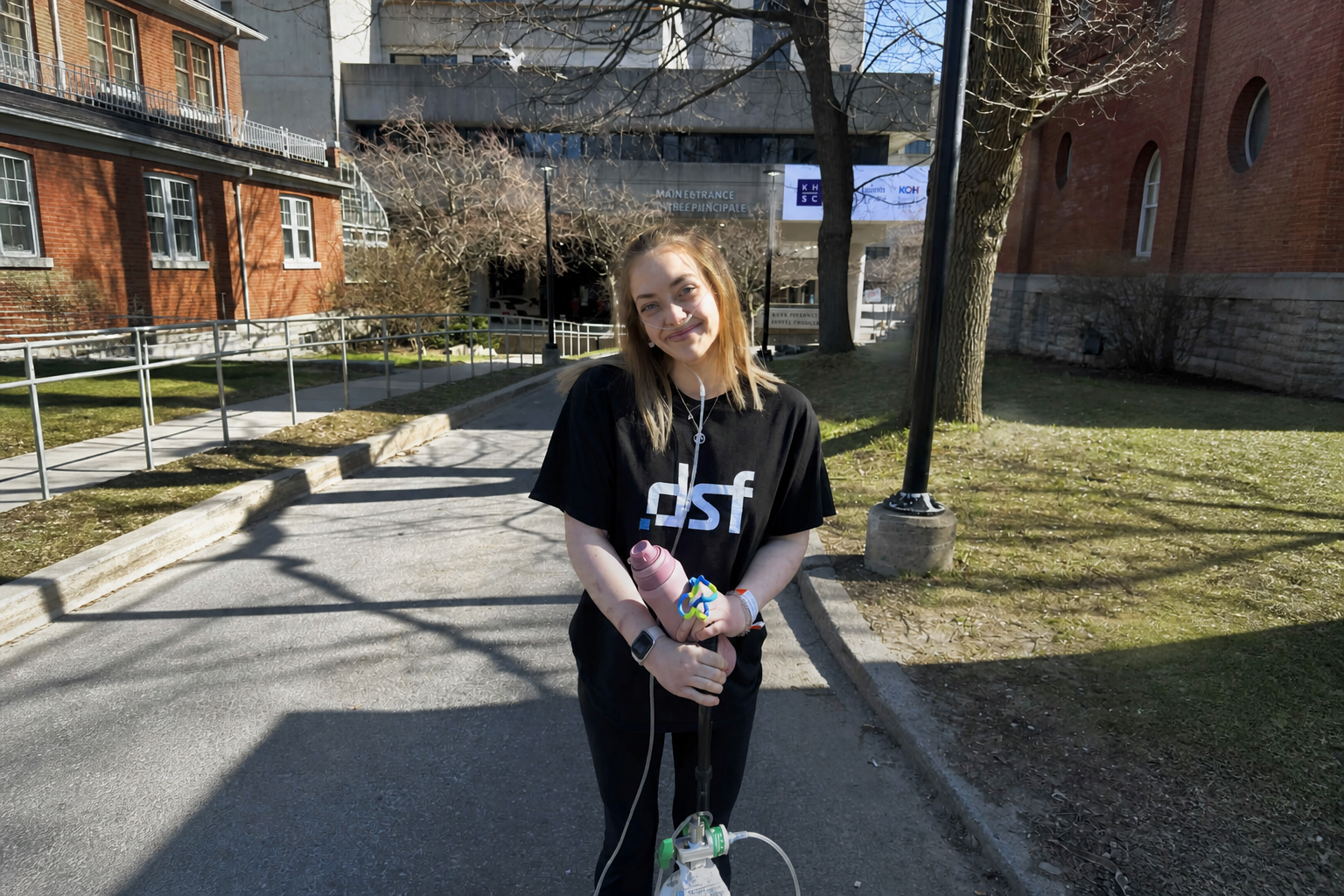
Les saines habitudes de vie avec la fibrose kystique: trouver un équilibre réaliste au quotidien
À 25 ans, Lex partage comment elle apprend à écouter son corps, à gérer son énergie et à trouver son propre équilibre avec la fibrose kystique, sans laisser la maladie définir qui elle est.
.jpg)
Aimer la vie et apprendre à la donner
Atteinte de fibrose kystique, Audrey refuse de se laisser définir par la maladie. Entre le deuil de son père, son combat pour la santé et son nouveau rôle de maman, découvrez le portrait d’une femme qui transforme chaque tempête en arc-en-ciel.