Testimonial: Looking forward with a heart full of hope
Miguel recounts his long journey marked by cystic fibrosis, liver cancer and liver transplantation, an ordeal that allowed him to regain stability and move forward with hope to the future.
Now 30 years old, I can safely say that my health is fine. My lungs are stable and my liver is only concerned about cystic fibrosis, which wasn't the case not too long ago. In May 2008, doctors discovered a mass on my liver, a form of cancer called hepatocarcinoma. This mass was removed quickly by resecting (removing) half of my liver. During remission, I obviously had to have frequent follow-ups with doctors as well as have magnetic resonance imaging (MRI) tests, liver doppler ultrasounds and blood tests to check for alpha markers.
In 2012, when I had returned to normal life after this episode, doctors noticed that these markers had suddenly increased, which could indicate a recurrence. Echograms and MRIs confirmed the presence of a new mass. I was worried that it was a recurrence of the disease I had experienced four years earlier. After consultation with specialists at Saint-Luc Hospital in Montreal, I was told that this time it was another type of cancer that was afflicting me, a cholangiocarcinoma. What a chance... This time, we opted for thermoablative resection, a technique that consists in burning the mass under local anesthesia. This is a painful procedure during which I did not have to cough, which is quite difficult with cystic fibrosis! I had a very nerve-wracking and stressful time, but luckily it was more fear than harm.
For the next two years, my liver was in remission and all was well. During this period, I completed my studies in Sherbrooke, and then moved to Montreal to start working. At the same time, I changed clinics. Two new teams were waiting for me at the CHUM: one monitored my liver and the other monitored cystic fibrosis.
In July, during a routine appointment, magnetic resonance imaging showed that a new mass had appeared on my liver. I then experienced a great disappointment and a moment of anxiety. They explained to me that there were two options: either I would suffer the famous burn a second time, or I would have part of the liver resected. The second option was risky, given where the mass was located and because my liver is cirrhosed (tissue that is not completely healthy) and full of scars. I had to think about it and make a decision. Once again, the decision was made to proceed with the
thermoablating. Fortunately, the procedure is now done under general anesthesia, which makes the procedure much less painful than before!
In order to make sure that everything would go well and that my body would absorb the necessary antibiotics well, it was decided to hospitalize me at the Hôtel-Dieu in Montreal one week before the operation. That way, my lung capacity would be at its best to withstand the anesthesia. I must admit, I was stressed and anxious to have this surgery again. When D-Day arrived, an extraordinary woman whom I very much trust, a nurse at the Hôtel-Dieu, accompanied me to Saint-Luc Hospital, where the operation was going to take place. She was present throughout the procedure, even until I returned to my room.
After the procedure, I met my hepatologist (doctor who takes care of my liver) who then talked to me about the possibility of a liver transplant. Oh la la! I was not thrilled and rather worried about what she was saying to me. More serious discussions started in September 2015. The biopsy of the last recurrence was re-studied, which confirmed that it was finally a hepatocarcinoma, making me the perfect candidate for the transplant.
While I was not quite ready for this ordeal, my family offered me essential support. In these types of decisions, it's encouraging to know that our loved ones are there to support us. In December of the same year, I officially made the decision to be on the liver transplant waiting list. But one more stress is
arrived: how was I going to explain everything to my boss? To my colleagues? How can I explain my frequent absences and delays?
In January, when a new year full of hope began for everyone, it was for me the start of an endless wait for a big change. When I was added to the waiting list, I was in eighth place. I was very anxious because I realized at that moment that I absolutely had to find the courage to talk to my boss about it. Fortunately, he reassured me that health is important and that they were going to be very understanding of my situation. In February, the pre-transplant nurse called me to let me know that I was now 3rd on the list and that I could be called at any time. At the time, doctors were also wondering about the possibility of a double lung-liver transplant. I then met with the lung transplant team to examine the possibility of having the double liver AND bipulmonary transplantation. However, the thoracic surgeon explained to me that my lung capacity tests were quite good, so I was avoiding lung transplants, at least for now!
On July 2, 2016, while I was in Sherbrooke, the phone rang: that was it, the long-awaited moment had arrived! I was relieved to think that this day was going to change my life. I set off with my mother but, after 15 minutes, I was called back: it was a false alarm. The liver removed was not the right size and the surgery was therefore cancelled. I was so disappointed and upset.
I went back to Montreal in the apartment I shared with my sister. On July 4, 2016, at 11:00am, I received the long-awaited call once again. This time I was told that I had until 5 pm to go to the hospital. Unlike the first call, I was able to take more time, which helped to reduce my stress level. I was able to call my parents, who set off to be by my side. I packed my bags and left a note on Facebook to inform those around me about the situation, then I left.
When I arrived, I was prepared for surgery. I was given several tests: blood tests, FEV1 (Maximum Expiratory Volume per Second), saturation, pressure measurement and then I was given intravenous antibiotics. I was anxious and happy at the same time. I tried to relax, but it was impossible. When I arrived in the operating room, I looked all around me and found the room very impressive. The nurse who took care of me was quick to give me a relaxer so that I would be less nervous, then after a while I fell asleep. The transplant went very well and, to my surprise, in less time than necessary. While this type of surgery normally takes 4 to 6 hours, the procedure took 2 hours and 30 minutes. When I woke up, I was surrounded by my parents and my sister. A few hours later, I was extubed. The first night was painful due to back pain, cough, nightmares due to morphine, exhaustion and anxiety about a possible complication. After a week in intensive care, I was moved to the hepatobiliary surgery care floor. Shortly after, I started getting up and walking. I was happy to see this progress and to have the support of my family. I sincerely thank all the members of the great team on the hepatobiliary care floor, who have shown all their
technical and listening skills to provide me with
the most professional care possible. It's teams like yours that make us proud of our hospitals.
Obviously, when you receive an organ transplant, you must start a new medication to avoid rejection. There are several changes to manage. For example, one should not eat 1 hour before and 2 hours after taking medication and should be taken at very specific times. With the addition of these, my blood sugar levels increased significantly, requiring me to do what was brand new for me, inject insulin. Imagining having to do all this at home worried me and
discouraged.
Two weeks after surgery, doctors decided to stop using the morphine pump and switch to subcutaneous injections. I started to be more and more active. I went out to go home and learn how to manage the new medication on my own. The calendar and several alarms are allies in order not to forget anything! After a month, the injections were also stopped and switched to dilaudid tablets, causing me to experience mild depression due to morphine withdrawal.
So it was in mid-August that I was released from the hospital. I spent my recovery at home with my sister, who helped me a lot. There were several follow-up appointments with the doctor and blood tests every week to adjust the anti-rejection doses, but I was finally home. It was still on the “high” of dilaudid and cortisone that I continued my recovery! I must emphasize my happiness in not having had my face swollen from cortisone, as is sometimes the case. The doctor signed my gradual return to work by the end of January, six months after the transplant. In the meantime, I read and walked a lot, watched a lot of Netflix and decided to embark on a triplex purchase project with my roommate.
The return to work arrived at the beginning of the following year. My colleagues and I were very happy to see each other again! Since it was a gradual return, I was on leave 3 days a week, which allowed me to rest and get used to the work routine.
At the time of writing this testimony, in December 2017, everything is going well. Despite all the fears, the episodes of pain, discouragement, joy, all sorts of mixed emotions, I have had no complications so far. The medication is stable and I have returned to my normal activities. I am happy because transplanting this new liver will save me a lot of problems in the future. I am still living with the ups and downs of cystic fibrosis, but getting a liver transplant does not increase my risk of the disease. Of course, as I am now immunosuppressed, I need to take my medication assiduously and be even more vigilant with my diet, as well as being vigilant with potential sources of bacteria in order to avoid infections and complications.
I take this opportunity to thank my donor's family wholeheartedly. Without their generosity, my life today would not be the same.
Miguel Moisan-Poisson
Montreal (Quebec) Canada
Interviews and testimonies
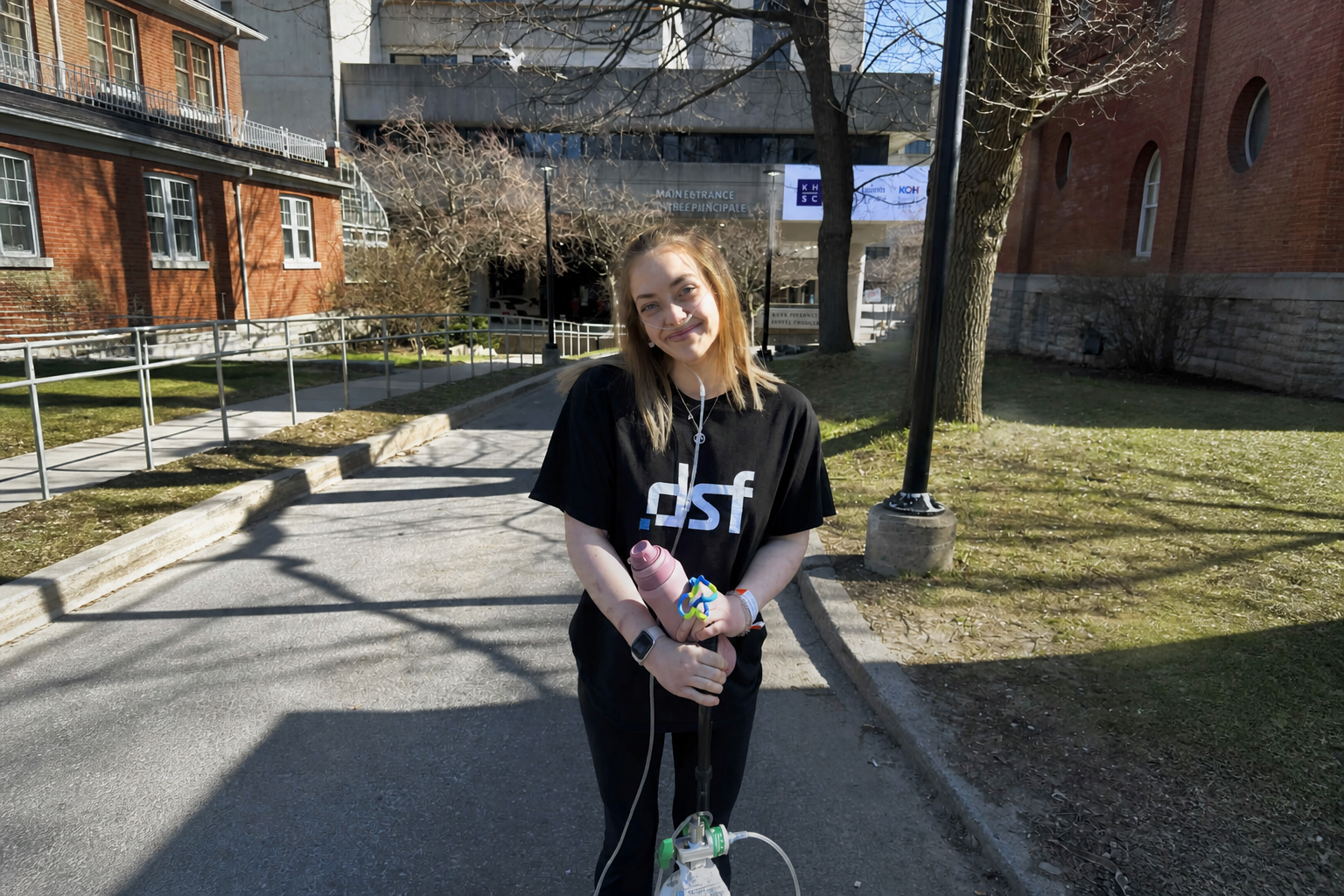
Les saines habitudes de vie avec la fibrose kystique: trouver un équilibre réaliste au quotidien
À 25 ans, Lex partage comment elle apprend à écouter son corps, à gérer son énergie et à trouver son propre équilibre avec la fibrose kystique, sans laisser la maladie définir qui elle est.
.jpg)
Aimer la vie et apprendre à la donner
Atteinte de fibrose kystique, Audrey refuse de se laisser définir par la maladie. Entre le deuil de son père, son combat pour la santé et son nouveau rôle de maman, découvrez le portrait d’une femme qui transforme chaque tempête en arc-en-ciel.