A story that is yours: interview with Laval de Launière
A look back on 30 years of commitment, humanity and transformation of the reality of adults with cystic fibrosis in Quebec.
Interviewed by Stéphanie Wells
Laval de Launière has a double job: he is director general of the Provincial Committee for Cystic Fibro-Cystic Adults (CPAFK) and a social worker at the Hôtel-Dieu cystic fibrosis clinic at the Hôtel-Dieu of the Centre Hospitalier de l'Université de Montréal (CHUM).
Health you well : Laval, you will soon be leaving the Provincial Committee for Cystic Fibro-Cystic Adults (CPAFK) to devote yourself to your work as a social worker at the Hôtel-Dieu of the Montreal University Hospital Center (CHUM). So here is an opportunity to take stock of your long involvement of more than 30 years with cystic fibro-cystic patients in Quebec. You studied in academic and professional counseling. First, the obvious question: why cystic fibrosis?
Laval de Launière: First of all, it should be noted that I have a bachelor's degree in academic and professional counseling, and a master's degree in counseling. Why cystic fibrosis? A simple combination of circumstances. At 30, I was a lecturer at Laval University in emotional psychology and I was looking for a full-time job. The problem was that I wanted to live in Montreal and keep my course loads in Quebec City. It was a happy coincidence that the late Dr. Roger Lasalle, at the time director of the cystic fibrosis clinic at Hôpital Ste-Justine, was looking for a part-time career professional whose task would be to facilitate the social and professional integration of cystic fibrosis patients. Clearly, he saw a future for his young patients and wanted to prepare them for it.
SVB: So you applied for this job?
LL: Informed by my professional order that the position was open, I submitted my application to Dr. Lasalle. The day before my interview, I did a brief search in the library to find out more about the disease. All I knew was the representation of a commercial poster from the time, which featured a young girl breathing hard behind an oxygen mask. On the same day of the interview, Dr. Lasalle confirmed my hiring.
SVB: How was your first contact with patients?
LL: My first contact with clients took place one afternoon in the clinic, in the hustle and bustle of a waiting room at Ste-Justine Hospital. I was amazed to see all these young people, alone or accompanied by a parent. The atmosphere was full of a vitality that I could not express. While the children drew or ran left and right under the watchful eye of their parents, adolescents and the rare adults with cystic fibrosis waited wisely for their turn, sitting on chairs that were too small for them. Never would I have expected to meet such “normal” individuals with such marked individual differences. I fell in love with it.
SVB: How did you adapt your intervention approach?
LL: I had to innovate. I first asked myself how to help my clients in a setting as unconventional as that of a clinic or a hospital stay. In other words, how could I involve these young people in a process of thinking about their life projects if I only saw them very briefly — once every three months — during their visit to the clinic? For some, there was of course the possibility of catching up during their hospitalizations. On the other hand, weren't there limits to overexposing them to my concerns about their future? Faced with these dilemmas, I set myself the goal of creating relationships with customers first, and then finding the best way forward.
SVB: What did you discover thanks to this particular relationship with cystic fibrosis patients?
LL: Among other things, I discovered that there are as many ways to live with the disease as there are sick people, and that the human tragedies that marked the history of cystic fibrosis had necessarily influenced patients' perceptions of themselves and their relationship with the disease. I also learned that human beings, whether they suffer from cystic fibrosis or not, have completely unexpected coping skills. Finally, I discovered that the existence of several cystic fibro-cystic patients was marked by infinite loneliness.
SVB: How did this solitude express itself?
LL: She was talking about things that were not said. At the beginning of the 1980s, when the median age of survival did not exceed the young twenty, we avoided discussing certain topics related to the future (work, life as a couple, procreation, etc.) in the presence of cystic fibro-cystic patients for fear of creating discomfort. Basically, the future was for... others. I am hardly exaggerating when I say that there was a real “culture of death.” It must be said that she was very present and difficult to hide. The sicker the patients were, the more time they spent with other hospitalized patients and, as a result, the more likely they were to experience the loss of a cystic fibrosis friend. Deaths were frequent, and we were all experiencing these moments with great emotion. You can only imagine what was going through the minds of the survivors. Will I be next? I cannot say enough how empathetic and helpful the hospital staff were under the circumstances.
SVB: Was the Provincial Committee for Adults with Cystic Fibrosis born out of these findings?
LL: For many, including myself, adults with cystic fibrosis were a source of encouragement to exploit. As the population of adults with cystic fibrosis grew, the more successful it offered models of success to present to younger people, and the more it showed them that they had a future ahead of them. It was therefore necessary to create favourable conditions for their social and professional integration. It was in this state of mind that the CPAFK was born in 1985. If there was a future, you had to be prepared for it! And what better way to prepare for it than to collectively give ourselves tools like the CPAFK. With enthusiasm mixed with skepticism, six adults with cystic fibrosis from Ste-Justine Hospital agreed to get involved and give life to the project, which will gradually develop at the provincial level thanks to the involvement of adults with cystic fibrosis from all over Quebec.
SVB: Was the cystic fibrosis clinic at the Hôtel-Dieu du CHUM created around the same time?
LL: Absolutely. While efforts were being made to make children and adolescents understand that they would eventually become adults, the ambitious project to transfer adults with cystic fibrosis from Ste-Justine Hospital to the Hôtel-Dieu in Montreal was taking shape. But this project, requested by the Ste-Justine Hospital administration and supported by doctors Roger Lasalle and Alphonse Jeanneret, met with fierce resistance. Some patients could not bring themselves to leave what had become a second family for them, while others felt betrayed. Weren't they all supposed to die at Ste-Justine Hospital?
SVB: I imagine that you played an important role in this delicate transition?
LL: The transfer of the first cohort of adults with cystic fibrosis from Hôpital Ste-Justine to the Hôtel-Dieu in Montreal took place over a few years. It was during this same period that I gradually changed employers to become an employee of Dr. Alphonse Jeanneret, then director and founder of the Hôtel-Dieu clinic at the CHUM. By continuing to work a few hours a week at Ste-Justine Hospital, I ensured in particular that the transfer took place in the best possible conditions for the patients, both psychologically and socially. At the same time, for those newly transferred, I remained that stable and reassuring figure that they knew was in contact with the staff at Ste-Justine Hospital. At the same time, I strengthened my ties with the community of adults with cystic fibrosis in Quebec through my actions as part of the mission of the CPAFK.
SVB: What exactly was this mission?
LL: From its inception, the CPAFK presented itself as an organization dedicated to the quality of life of adults with cystic fibrosis in Quebec. Essentially, the aim was to equip adults with cystic fibrosis with the aim of better management of the disease. The reality of adults with cystic fibrosis was changing and was inevitably creating new needs. We had to identify and respond to them with our knowledge and resources. In the wake of the enthusiasm for the perspectives offered by the CPAFK and burning with impatience, I purchased the “629” (629 Prince Arthur West in Montreal), which has become a private resource for adults with cystic fibrosis. This residence in downtown Montreal would house the head office of the CPAFK and became for more than twenty years a place of accommodation for adults with cystic fibrosis from Quebec in need. During these years, twenty adults with cystic fibrosis took up residence there for periods ranging from a few months for some to several years for others. Twenty-seven years later, the head office of the CPAFK is still located at “629”.
SVB: Did you encounter resistance to such an audacious project?
LL: Of course. This resistance came mainly from the Quebec Cystic Fibrosis Association (AQFK), now Cystic Fibrosis Quebec, which did not see the arrival of a new associative actor in cystic fibrosis. On the side of the AQFK, it was difficult to explain why the adults with cystic fibrosis involved in the CPAFK in training do not find the AQFK a place to thrive, and that they show so little enthusiasm in sharing their primary mission, which is to raise money for research. However, the CPAFK was a nascent organization, and therefore very fragile, which had to pursue an autonomous reflection in order to better define its own associative mission. It should be borne in mind that the few directors of the CPAFK were young adults in search of autonomy and emancipation, while the directors of the AQFK were mostly parents obsessed with the desire to save their child through the progress of scientific research. The CPAFK was part of a completely different dynamic. It talked about the management of the disease, autonomy, emancipation, emancipation, marital life, parental overprotection, access to the labor market, etc. Above all, the CPAFK wanted to be a community organization providing mutual aid and support for its members.
SVB: In your opinion, has the reality of adults with cystic fibrosis changed a lot in the last thirty years?
LL: “Changed,” you say? To use the expression I used earlier, the “culture of death” has given way to a “culture of life.” Thirty years ago, cystic fibrosis was essentially a pediatric disease. Adults with cystic fibrosis were extremely rare. They were considered to be suspended beings with no real future. Who would have thought that the median age of survival would rise from the early 20s to 48, that the number of adults with CF would exceed the number of children with cystic fibrosis, that lung transplants would add many years of life to their lives, that women with CF — and even more surprisingly, men with CF — and even more surprisingly, men with cystic fibrosis, who are infertile — would have such large numbers of children, or even grandchildren, and that adults with cystic fibrosis would join the workforce as significantly? And the list could go on...
SVB: In your opinion, was the CPAFK an important player in the history of cystic fibrosis in Quebec?
LL: Quietly, maybe, but certainly in a significant way. The CPAFK has been and remains a leading organization for many adults with cystic fibrosis in Quebec. It has helped to break their isolation and give them a sense of belonging, while equipping them to better manage the disease. The CPAFK has played an important role, both nationally and internationally, by championing information and offering an unusual organizational model in the cystic fibrosis community. For those who do not know the structure of the CPAFK, it is important to note that 20 of the 22 members of its board of directors suffer from cystic fibrosis, while representing the various administrative regions of Quebec. Let's recognize that it is unique that a cystic fibrosis aid organization is managed by the beneficiaries themselves, not to mention that it has managed to go through 27 years of history, despite the turmoil that a disease such as cystic fibrosis brings to the members of an organization.
SVB: You are about to leave the ship. How do you see the future of the CPAFK?
LL: The CPAFK has evolved a lot since its foundation. At the beginning, I was the driving force behind the organization, if I may say so. Supported by a small administrative team of six adults with cystic fibrosis — the founding members of the committee — I worked to make the organization as functional as possible, while fulfilling its social mission. Over time, with the contribution of cystic fibro-cystic volunteers and the injection of new funds, the organization grew. It has become more structured, more functional and definitely more representative. Today, the directors of the CPAFK are in full control of the organization. My departure should pave the way for new adaptations and allow the organization to gain more autonomy. The challenges that await the CPAFK are numerous. Among other things, it must play a more active role, both on social networks and with public decision-makers. It must develop new strategies to ensure better funding and add staff to its staff. It must also get closer to its valued partners, which are Cystic Fibrosis Quebec, Cystic Fibrosis Canada and the Air d'aller Foundation. Its survival depends on it. While the CPAFK has every reason in the world to be satisfied with its infection prevention policy, it will need to make use of new communication technologies to further integrate those who fear being in the presence of other adults with CF, or those who themselves represent a danger to others because of the nature of their bacteria. Adults with cystic fibrosis can be extremely proud of their organization. In conclusion, I would like to thank everyone who accompanied me on this great adventure.
SVB : On behalf of adults with cystic fibrosis in Quebec, thank you very much, Laval, for all these years of exceptional commitment and dedication.
Interviews and testimonies
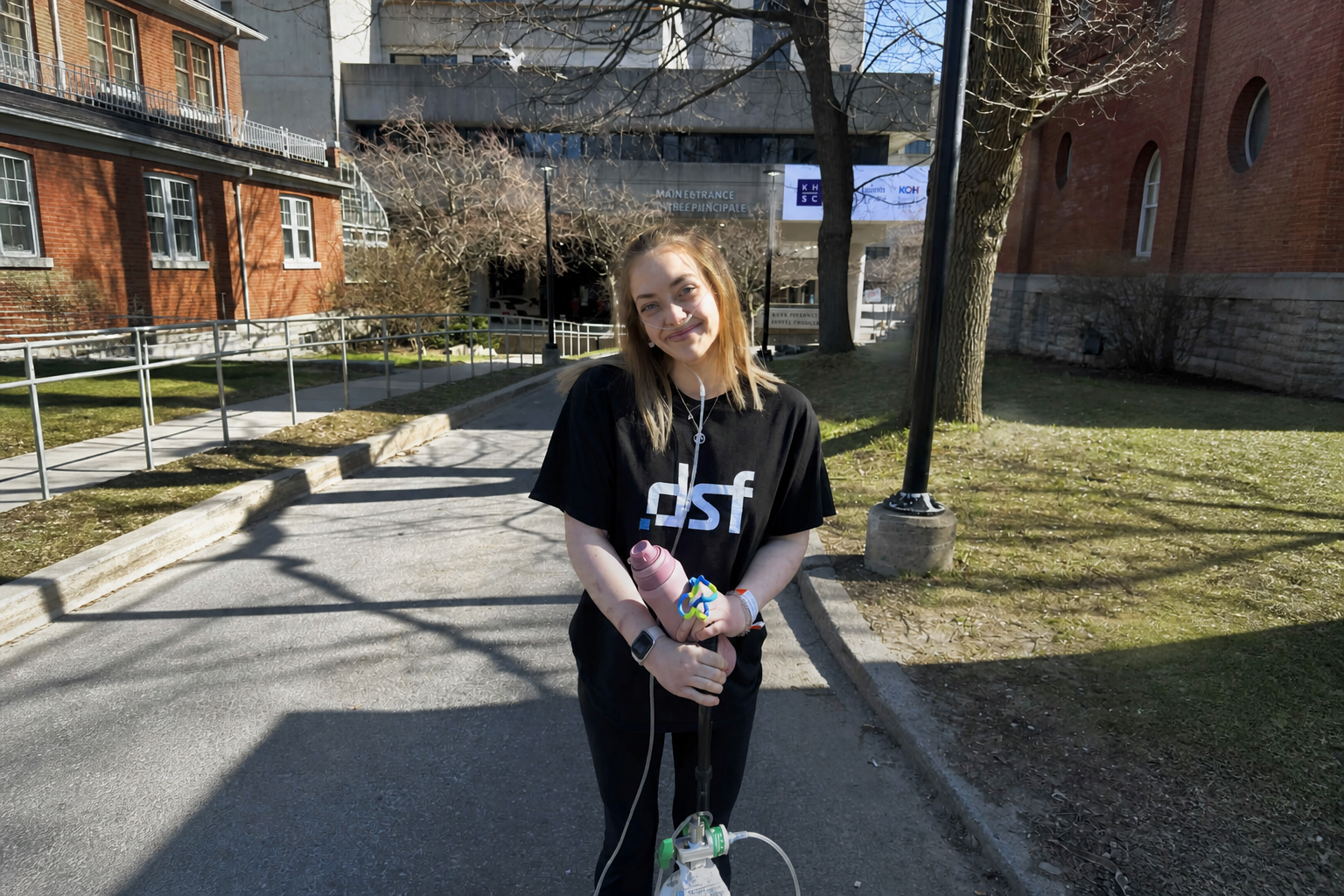
Les saines habitudes de vie avec la fibrose kystique: trouver un équilibre réaliste au quotidien
À 25 ans, Lex partage comment elle apprend à écouter son corps, à gérer son énergie et à trouver son propre équilibre avec la fibrose kystique, sans laisser la maladie définir qui elle est.
.jpg)
Aimer la vie et apprendre à la donner
Atteinte de fibrose kystique, Audrey refuse de se laisser définir par la maladie. Entre le deuil de son père, son combat pour la santé et son nouveau rôle de maman, découvrez le portrait d’une femme qui transforme chaque tempête en arc-en-ciel.