Pre-transplant nutritional status: a new study
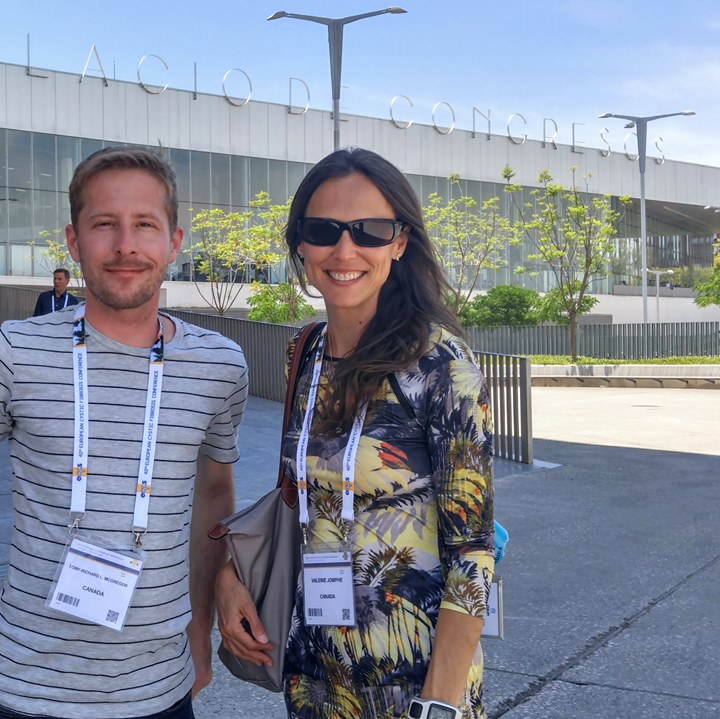
Interview with Valérie Jomphe, nutritionist
Notre-Dame Hospital in Montreal (CHUM) transplant clinic
By Tomy-Richard Leboeuf McGregor
On the occasion of the 40th European Cystic Fibrosis Congress, which was held in Seville in June, nutritionists Valérie Jomphe (transplant clinic at Notre-Dame Hospital) and Marjolaine Mailhot (cystic fibrosis clinic at the Hôtel-Dieu) presented the surprising results of a study recently carried out on a cohort of transplant patients. To find out more, we met Valérie Jomphe there as part of an express interview.
Hello Valerie! Since when have you been a nutritionist at the ChUM transplant clinic and why are you participating in this 40th European Cystic Fibrosis Congress?
This is my 15th year as a nutritionist in the Lung Transplant Program at the CHUM. I am present at this conference to present the results of a study that evaluated the impact of pre-transplant BMI on short-term post-transplant outcomes in CF patients receiving lung transplants at the CHUM.
What were the results of the study and did they surprise you?
We retrospectively reviewed the records of 161 CF patients with lung transplants at the CHUM from 1999-2015 and compared the duration of mechanical ventilation, the length of stay in intensive care and the length of stay in hospital. To complete the research, we also looked at mortality and post-operative complications according to BMI categories:
- group 1: BMI < 18.5
- group 2: BMI 18.5-21.9 (female) and 18.5-22.9 (male)
- group 3: BMI ≥ 22 (female) and ≥ 23 (male).
Intra-hospital mortality was 4.8% for group 1 and 4.4% for group 2 while no deaths were observed in group 3. These differences were not statistically significant, as were differences in complications, duration of mechanical ventilation, and ICU and hospital stays. We then compared the results of the transplant in patients who received invasive nutritional support (tube or intravenous nutrition) in pre-transplant to those who did not use it. The differences were not significant except for a tendency to have more surgical complications for the group of patients who did not receive invasive nutritional support in the pre-transplant period. These results suggest that pre-transplant BMI or having invasive nutritional support is not a significant determinant of short-term post-transplant outcomes in our CF lung transplant cohort.
How were your results received and do you think this study will change the way lung transplants are done?
Our results have been well received. They raised questions about the early or late indication of invasive nutritional support for CF patients who are candidates for transplantation. However, these results should be interpreted with caution and nuance. This study does not question the recommended BMI targets >22 (female) and >23 (male) that are associated with better lung function. However, in the terminal stage of lung disease, these targets were found to be not associated with better post-transplant outcomes. As for the selection of a modality to support nutritional status until the transplant, when indicated, it must be evaluated taking into consideration not only the BMI, but the overall nutritional status of the patient and its evolution. It is also necessary to take into account the risks and benefits of each proposed modality and, of course, involve the patient in decision-making. Of course, further studies are required in order to better define nutritional recommendations for CF patients who are candidates for lung transplantation.
In conclusion, what changes in the nutrition of people with CF after a transplant?
Lung transplantation does not cure CF. The intake of pancreatic enzymes and vitamins should be maintained following the transplant, although dose adjustments are sometimes required. Caloric needs are generally lower due to a decrease in energy demand induced by the correction of terminal respiratory failure. Many side effects are associated with taking immunosuppressive medications for which nutrition is a determining factor in the treatment or prevention of certain conditions such as diabetes, high blood pressure, dyslipidemias, dyslipidemias, osteoporosis, or kidney failure. Depending on the basic nutritional status and overall condition of each patient, a nutritional treatment plan is sometimes required, which involves changes in eating habits. Overall, healthy eating is recommended after the transplant.
Thanks Valerie!
Research
Cystic Fibrosis Research: Major Advances and Persistent Challenges in 2015
A review of the scientific advances presented in 2015 highlights the progress of therapies targeting CFTR, in particular Orkambi, while highlighting the challenges related to their effectiveness, accessibility and cost.