Testimonial: The FK bereavements
Eric describes the multiple bereavements experienced with cystic fibrosis: the announcement, the loss of a “normal” life, the overwhelming role of caregiving, letting go as an adult and, sometimes, the ultimate bereavement. A text about love, powerlessness and the lasting marks of mourning.

Testimonial by Éric Girard, published in SVB number 45
September 2021
First of all, there is this announcement. “Maybe it's cystic fibrosis.” It's a deafening shock, but as parents, hope takes over as we await confirmation of the true diagnosis.
Then there is daily life. “One day we'll get used to it.” No
Also, there are the others. “Yes, I understand.” Unfortunately, no, you don't understand.
Then, in some cases, there are sisters and brothers. “Ah? Is that a fatal disease?” Yes.
Finally, the transfer from the hospital for children to that of adults also brings a range of reorganizations that flirt with mourning. “Ah. Sorry, she is now of age, that's none of your business anymore...”
Caregivers. Sounds like the name of a specialized care job for someone special. We are not thinking of applying for this job. It is imposed on us. The role of parent was chosen, but in the job description, there was no explicit mention that “caregiver” would be a part of it as intensely from the start and for such a long time. We already know that parenting is multi-faceted. It's like a general store, you can find everything, but basic. A family caregiver is a specialized general practitioner. He must have a thorough knowledge of the science that explains the condition associated with cystic fibrosis in the case in which we are interested. He must demonstrate impeccable know-how in treatment techniques. He becomes a machine for organizing schedules and ingenuity to facilitate daily life despite changes in the physical state of the sick child. It must also be able to maintain a high morale. It is therefore a specialist doctor, a specialized nurse, a knowledgeable respiratory therapist, an experienced respiratory therapist, an effective physiotherapist, an organized secretary, a seasoned tax specialist, an informed insurance broker, a psychologist who is sometimes exhausted, or even an exhausted psychiatrist, even an exhausted psychiatrist, a full-time social worker, a full-time social worker, an effective physiotherapist, an effective physiotherapist, an effective physiotherapist, an excellent ethicist, an informed insurance broker, a sometimes exhausted psychologist, or even an exhausted psychiatrist, a full-time social worker, a full-time social worker, a full-time social worker, a meticulous accountant, an impeccable ethicist, an intelligent philosopher, an “encouraging coach”, etc. that the term “natural caregiver” contains.
There is the loss of a normal life that must happen. It starts with the breakdown of life prior to diagnosis. Like any fatal disease, cystic fibrosis is a tautology to death. There are quick, sudden deaths. We are surprised and the shock is immense. There are slow and inevitable deaths. They present themselves to us gently, but with such violence in the promise of suffering of a long and heavy agony for the patient and those around him. Even if we are adults at the announcement of the diagnosis, the verdict of conviction, our perception of time is altered. We still cannot realize the length of thirty years of life. We cannot distinguish between our “thirty years” and that of our child's life expectancy. “That's good, life expectancy is now 36 years. It is not the same as before when patients did not reach the age of 18. They can now live a nearly normal life by planning projects like higher education, an apartment, a life as a couple, and even children.” For a parent in their thirties, that sounds like “very little time to live and very little to achieve” in that short amount of time. Death is ringing at the door, but... she has already entered. It is the loss of a normal life for our child.
As the years go by, cystic fibrosis — the death to come — is making its nest and taking up more and more space. We realize that a busy and tight schedule will not be the solution. The religious follow-up of
Prescriptions for treatments, medications, diets and physical exercises cannot indefinitely contain the appearance of new symptoms and the deterioration of the physical and mental state of our child. Each stage of life brings its share of suffering: the first pills swallowed alone, force-feeding, intravenous antibiotics, hospitalizations (with the parent, then alone), new medications with side effects, decreases in lung capacity, laparoscopies, laparoscopies, laparoscopies, future lung transplantation, future lung transplantation, perhaps, liver transplantation, perhaps, the end of studies and the end of permanent work in adulthood. All this leads us to difficult decisions and involves its share of suffering and then leads inexorably to death.
A caregiver is an individual. An individual can cope with a certain amount of pain. He can go a long way and he usually has the option of ending it at every difficult moment. Fortunately, very few choose this option for their CF offspring, even if there are pitfalls at every risk. The individual with cystic fibrosis is no different from other individuals. He has that same sense of choice, even though staying alive is more difficult than for others. The parent of a sick child has no choice for their child. His love does not allow him to consider death as a way out. The independence of the child, which grows with age, places the parent in a position of powerlessness. It is the loss of being a parent who cares about the safety and sustainability of his offspring, but who becomes a spectator playing an unfortunately less and less important role in the survival of his child.
Thus, the unexpected arrival of their child into adulthood leads parents to abandon his care, because now he takes care of cystic fibrosis himself. For these parents, it will never be the same again: it is an enormous letting go and it is a loss for this life arranged at the pace of the disease. In the process of bereavement, it is necessary to discover this new role of parent, this new life further removed from the illness that was imposed on the family.
When a child gives up a fight that is too long and too difficult, after a daily war of several years, it is a face to face with real death. This physical disappearance of the loved one then obviously takes place definitively. How do you go through this stage calmly? Should the suffering have been too great for us to better accept this departure? Whose fault will it be? Cystic fibrosis, care, the environment, medicine, science, time? These are several questions that will remain unanswered. Until the end, we must stay the course despite the storms that beset us with a daily life that is normally too different from others, the vagaries of normal life with exceptional conditions.
Grief, in any form whatsoever, is an injury that can be treated, just like a physical one. Each person affected by bereavement will have to take the time to care for themselves at their own pace, in their own way. But like any healing, it will remain sensitive and leave marks forever.
Interviews and testimonies
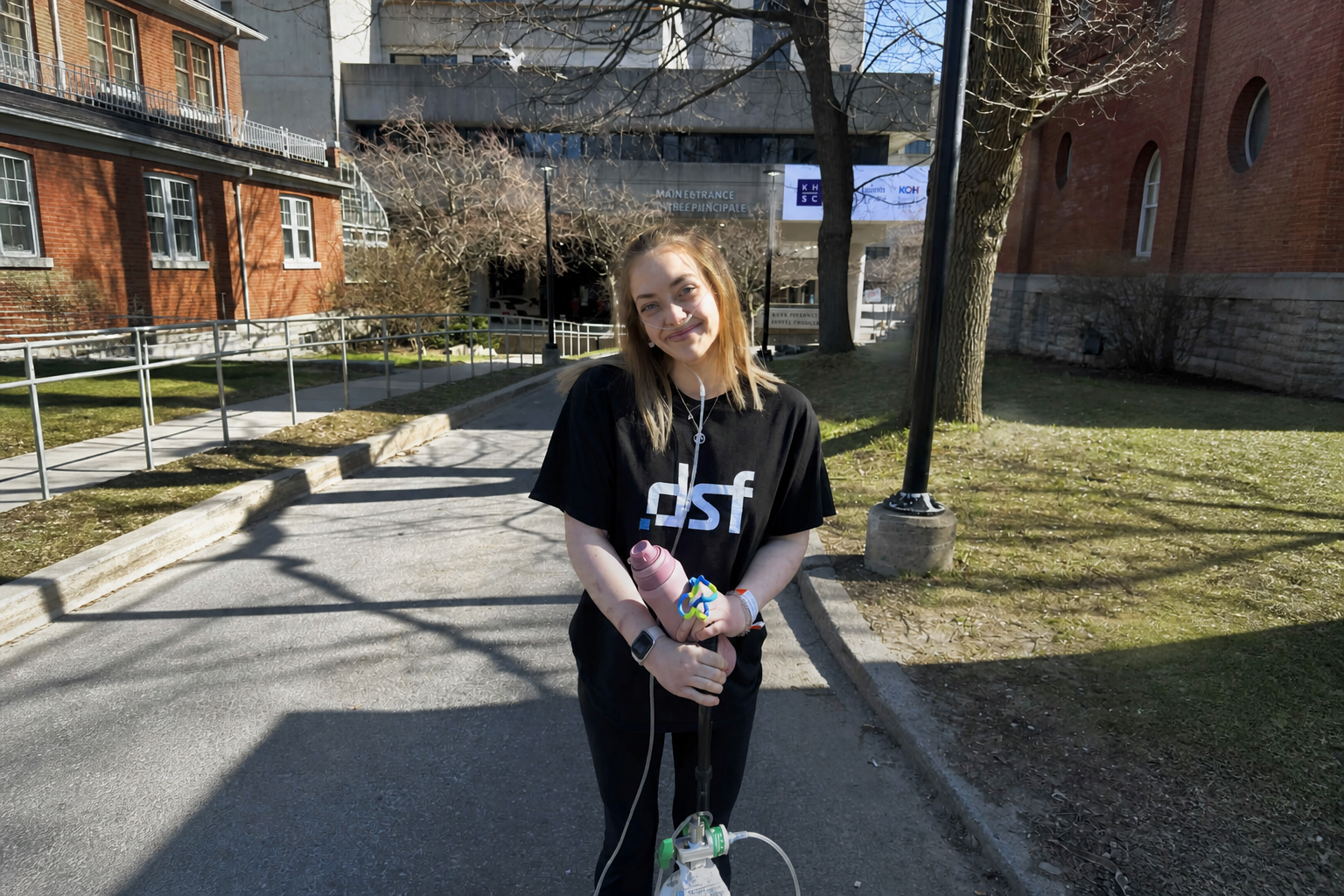
Les saines habitudes de vie avec la fibrose kystique: trouver un équilibre réaliste au quotidien
À 25 ans, Lex partage comment elle apprend à écouter son corps, à gérer son énergie et à trouver son propre équilibre avec la fibrose kystique, sans laisser la maladie définir qui elle est.
.jpg)
Aimer la vie et apprendre à la donner
Atteinte de fibrose kystique, Audrey refuse de se laisser définir par la maladie. Entre le deuil de son père, son combat pour la santé et son nouveau rôle de maman, découvrez le portrait d’une femme qui transforme chaque tempête en arc-en-ciel.